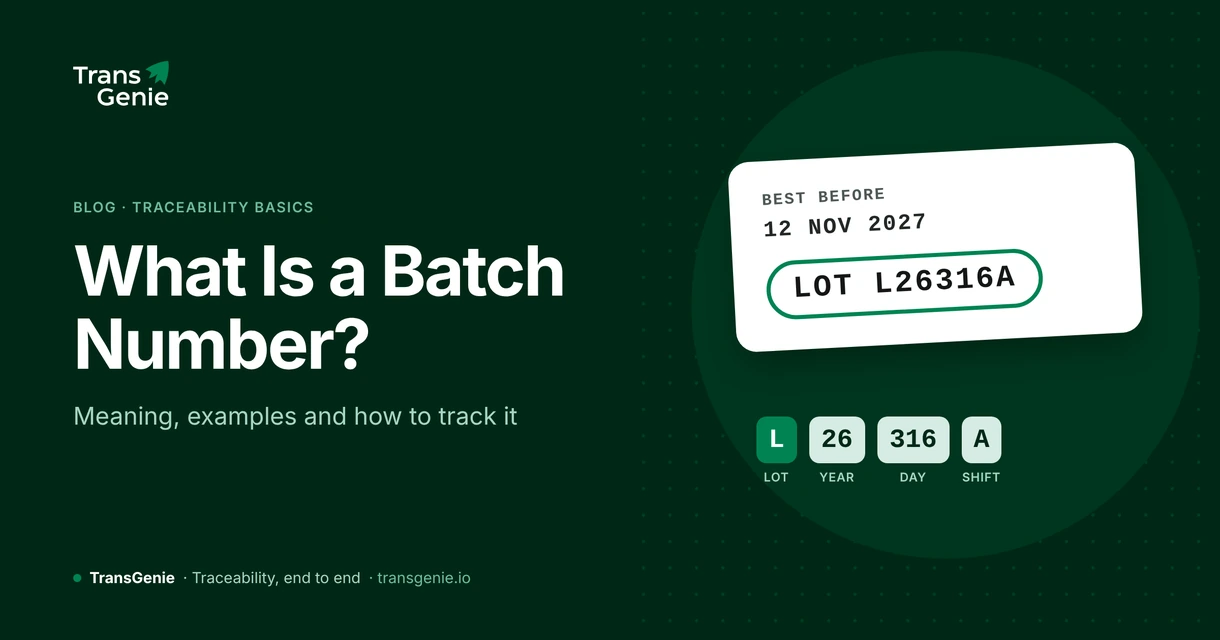
Keeping track of products throughout manufacturing and distribution is important for maintaining quality and ensuring traceability. For this, businesses need a simple way to identify the products that have been made during the same production run and track them as they move through the supply chain.
A batch number makes this possible by linking the products to a specific production run. This helps businesses monitor product quality, trace product history, and identify affected items if a quality issue or recall occurs.
What Is a Batch Number? Understanding the Basics
A batch number is a unique code that is assigned to a group of products that are made during the same production run. It helps manufacturers identify the products that share the same raw materials, equipment, and production conditions.
Also known as a batch code or batch identification, it connects products to their manufacturing records. This includes the materials used, production date, equipment, and quality checks. If a product has quality concerns or needs to be recalled, the manufacturer can use this code to identify the affected items and check their product history, even after they left the factory.
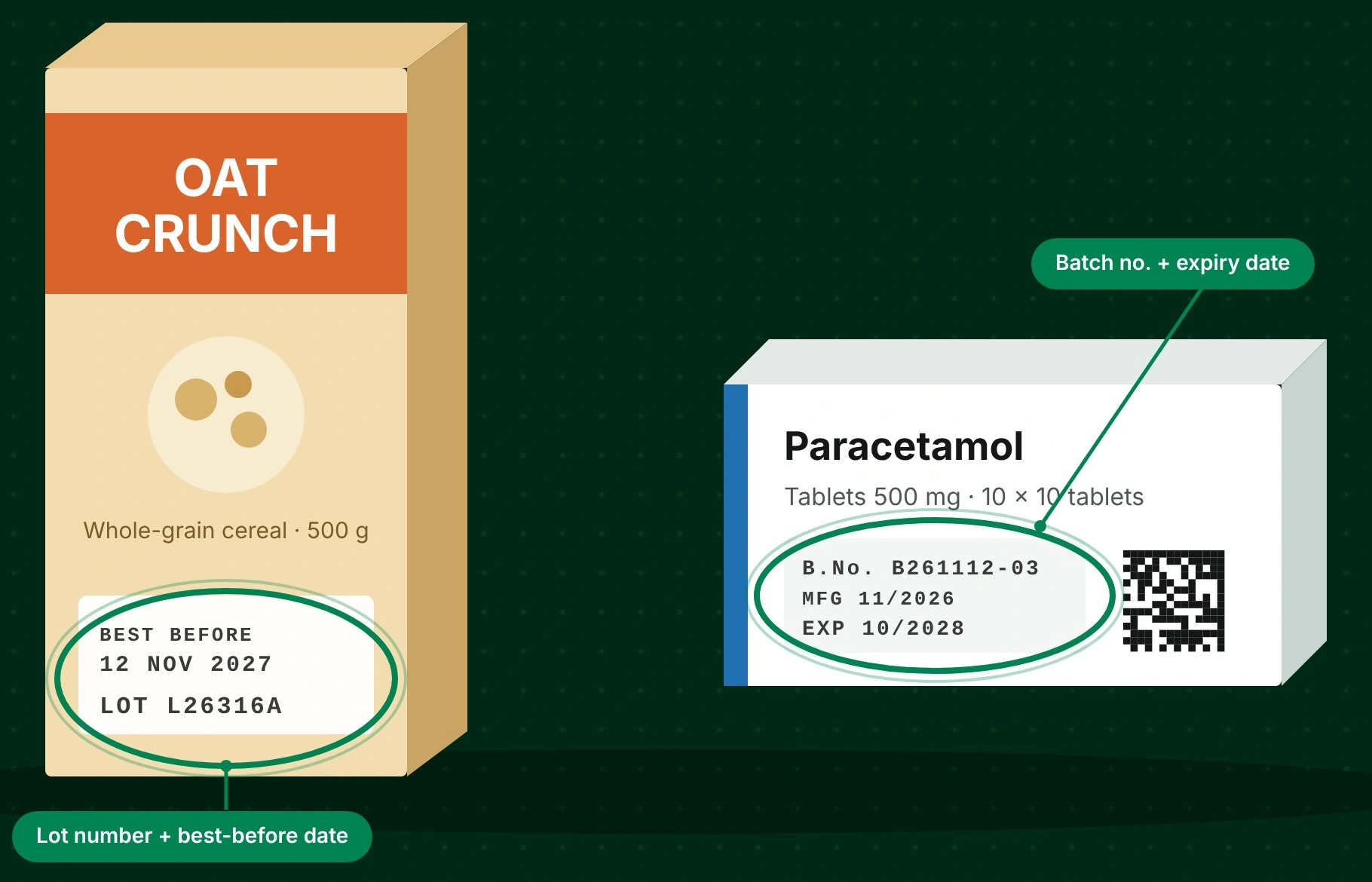
In the food industry, a batch number is often called a “lot number”. EU law defines a lot as a group of sales units produced, manufactured, or packaged under practically the same conditions.
Is a Batch Number Mandatory for All Products?
Actually, there’s no single rule that says every product that ever existed must carry a batch number. The requirement depends on the product category and the regulations in the market where it’s sold. Food, cosmetics, and medicines face stricter requirements. This is because product safety and consumer health are directly involved. For other goods, batch marking is left to the manufacturer’s discretion.
Also, legal requirements aren’t the only consideration. Retailers, distributors, and export buyers often expect the products to have clear batch identification before accepting them. Without proper batch marking, manufacturers risk losing retail opportunities, certifications, and valuable contracts. This is why batch numbering is a standard practice for most manufacturers, even when it’s not legally required.
What Does a Batch Number Look Like?
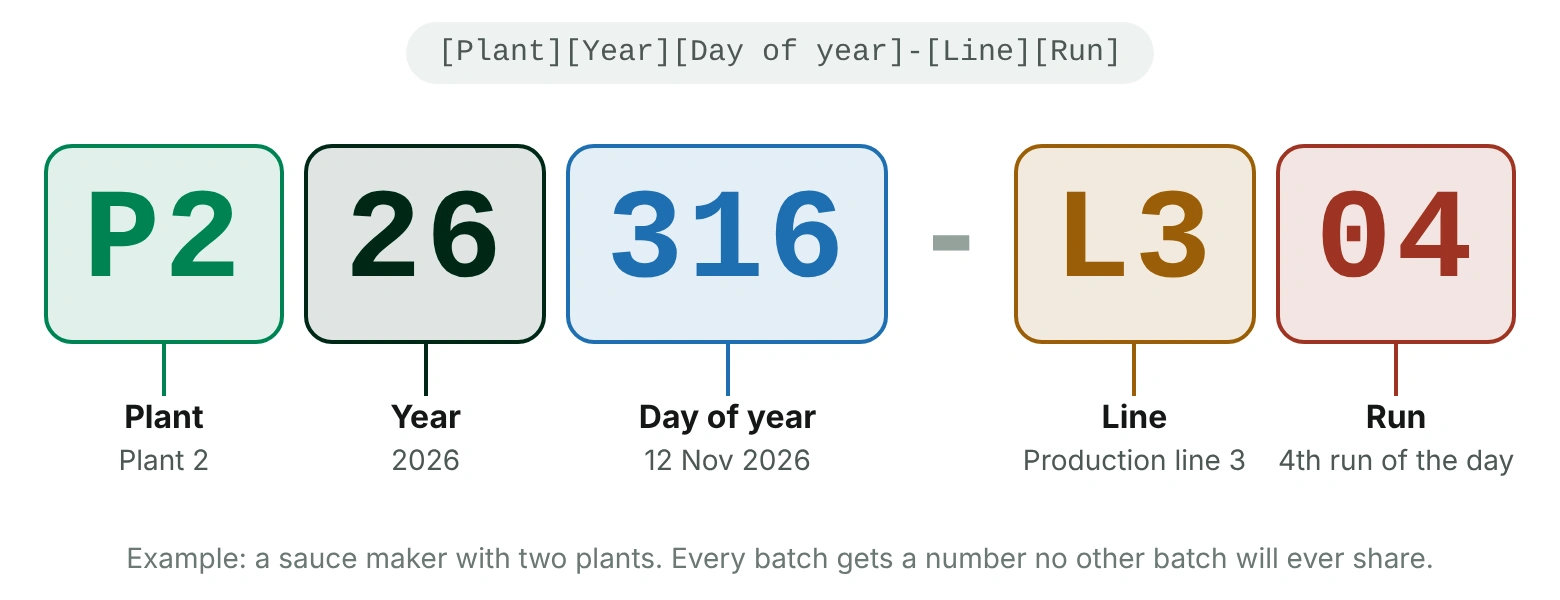
There’s no universal format for a batch number. Each manufacturer follows their own coding system. A batch number can contain letters, numbers, or a combination of both. However, most batch code samples include details such as the production date, batch identifier, and production sequence.
For example, you can consider the following batch code:
B = Batch | 26 = Year 2026 | 11 = November | 12 = 12th day of the month | 03 = Third production run of the day
Now that you understand how batch numbers work. Here are a few more batch code examples to help you understand how different manufacturers structure and use these codes across industries.
| Sample Batch Code | How to Read It | Often Seen On |
|---|---|---|
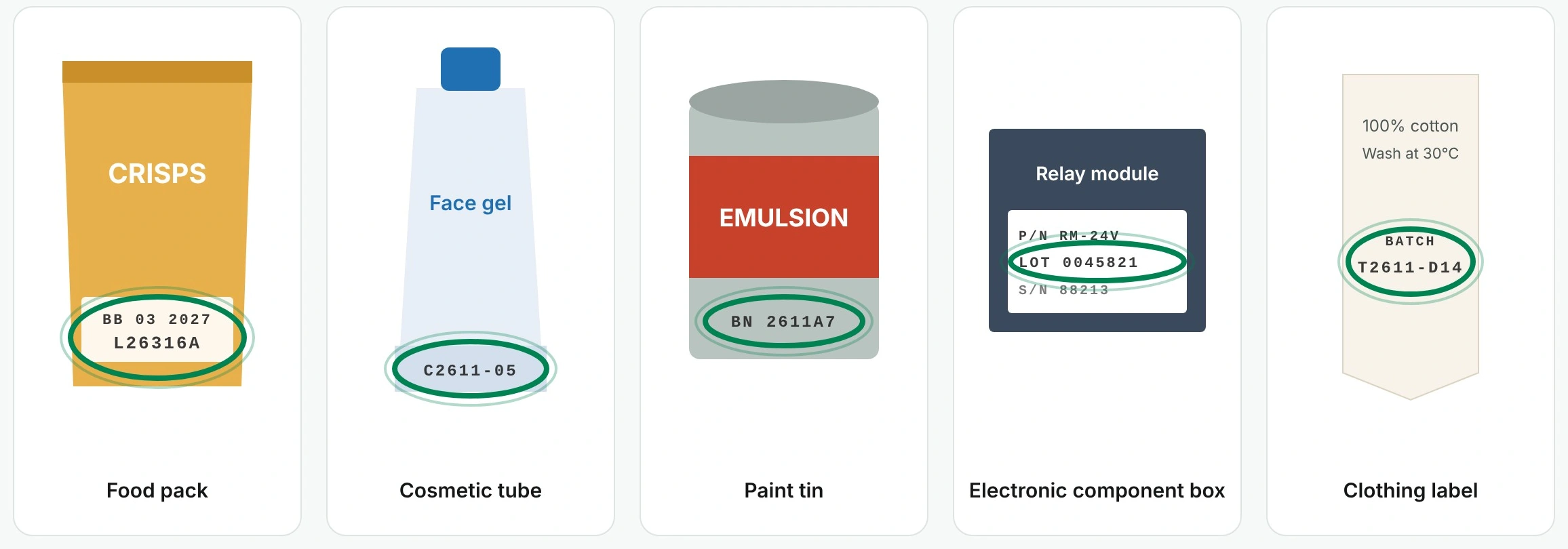
| L26316A | L = Lot, 26 = 2026, 316 = Day 316 in a year, A = Morning shift | Food and drinks |
| C2611-05 | Production made in November 2026, fifth production run | Cosmetics and chemicals |
| 0045821 | A unique running number linked to the manufacturer’s production records | Pharmaceuticals and electronics |
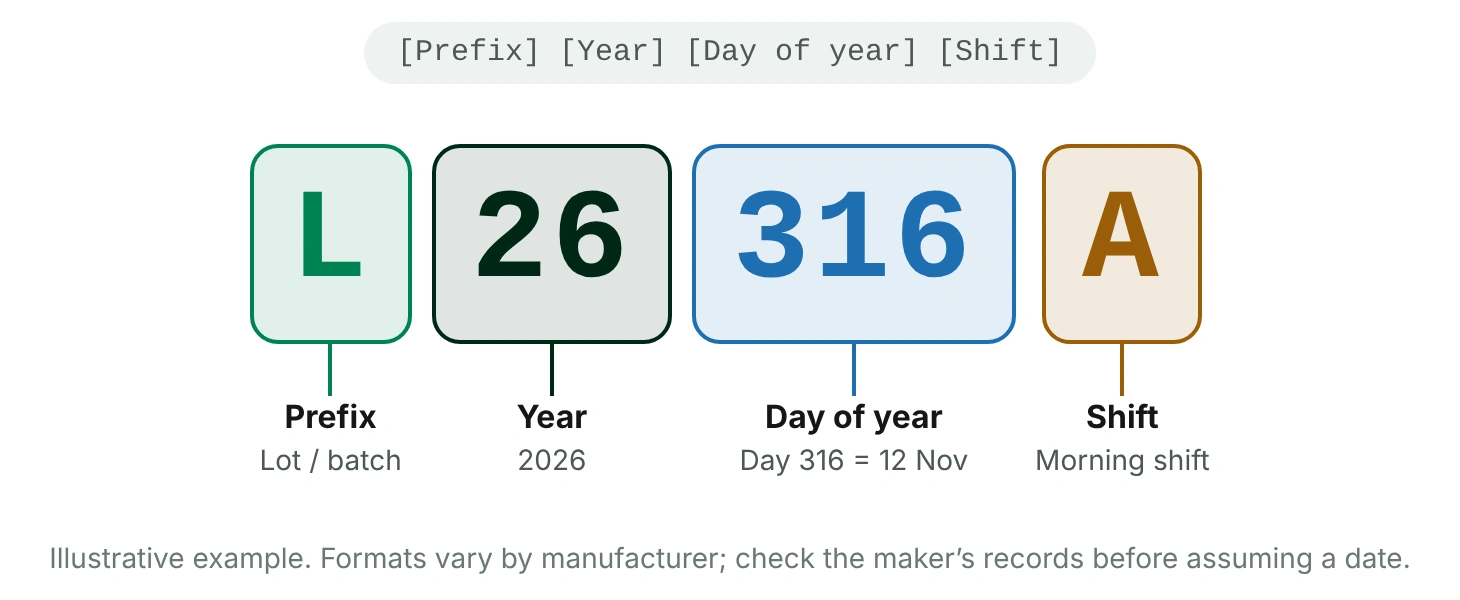
Not every batch number contains readable production details. Some manufacturers use simple running numbers that can only be linked to the production dates, equipment, and other records through their internal systems. Also, avoid guessing the production date from an unfamiliar batch code.
Where to Find the Batch Number on a Product?
Most of the batch numbers on products are printed near the manufacturing or expiry date. Depending on the product, you can usually find them in the following places.
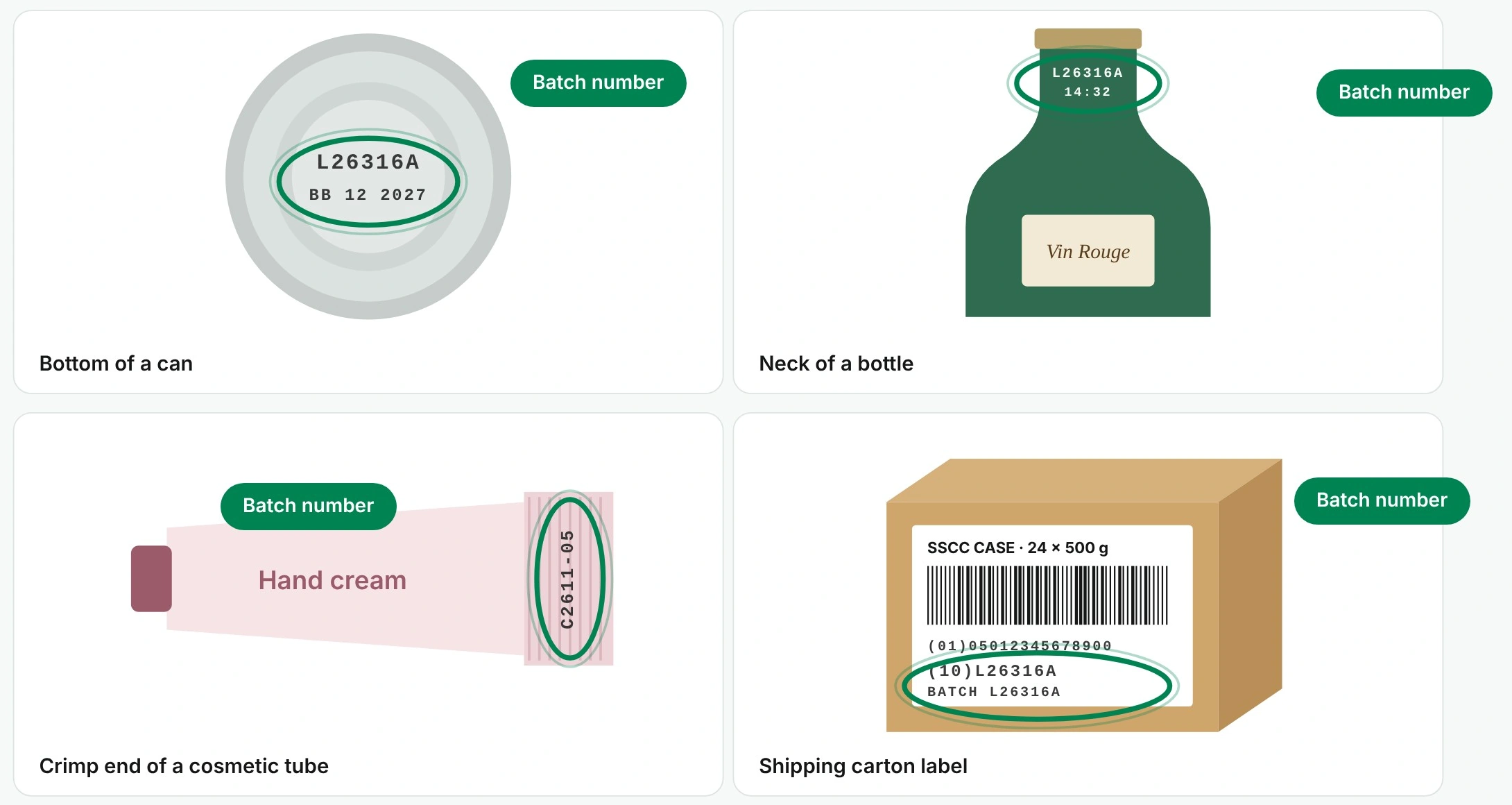
- Food & Beverages: Check the lid, bottom of the can, neck of a bottle, or back seam of a packet. This is usually placed near the “Best Before” or “Use By” date.
- Cosmetics & Personal Care: Look at the sealed end of the tube, bottom of a jar/bottle, or the outer packaging.
- Pharmaceuticals & Medicines: Check the side or bottom of the medicine boxes, blister packs, bottle labels, or medicine strips.
- Household Cleaning Products: Look at the back or bottom of the detergent bottles, cleaning sprays, and chemical containers.
- Electronics & Related Products: Check the product label, back panel, underside, or packaging near the serial number.
- Industrial Products & Materials: Look for the batch details on product labels, containers, drums, bags, or shipping cartons.
The batch numbers are often marked with labels such as Lot, L, Batch, B, Batch No, Batch Nr, or BN. These numbers are usually printed directly on the packaging using inkjet or laser printing. Since these markings can sometimes appear faint or uneven, you can try tilting the package under a bright light to read them more precisely.
Batch, Lot, Serial & Barcode: Who Does What?
Each product identification code may look familiar, but each serves different purposes. Here’s what each means:
Batch Number
Identifies a group of products made during the same production run. Every unit in that batch shares the same number.
Lot Number
Identifies products made, processed, or packed under similar conditions. In many industries, it is used interchangeably with a batch number.
Serial Number
Identifies one individual product. Each item has its own unique serial number, making it possible to track separately.
Barcode (GTIN)
Identifies the product type rather than a specific production batch or individual item. All units of the same product type generally share the same GTIN.
Are Barcode Number and Batch Number the Same?
No, a barcode number, such as a GTIN, identifies the product type, while a batch number identifies a specific group of products made during the same production run. For example, two cans of the same cold drink may have the same barcode but different batch numbers. This is because they were produced in separate batches.
Why the Batch Number on Medicine Matters More
A medicine batch number does more than identify a production run. It helps manufacturers track medicines, verify product details, and identify affected packs during recalls. This makes the batch number on medicine an important part of safety and quality control.
When it comes to medicines, the batch number (medicine batch no) is usually printed on the end flap of the medicine box, blister strip, or bottle label, or often beside the expiry date (EXP).
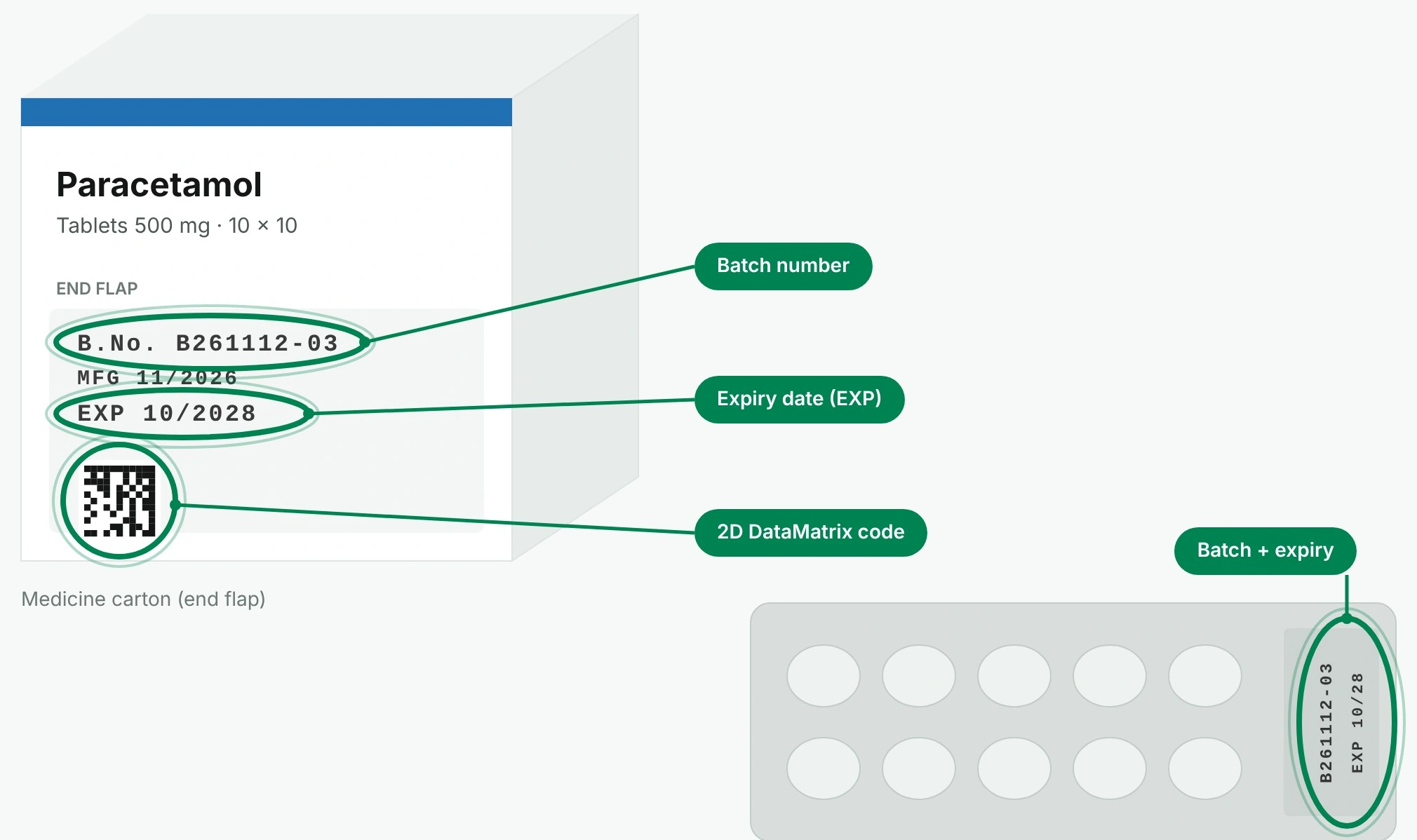
For medicines, the batch numbers are also a regulatory requirement in major markets:
- United States: Under DSCSA (Drug Supply Chain Security Act), prescription drug packages must carry a product identifier that includes the product code, a unique serial number, the lot number, and expiry date. This should be in both human-readable and machine-readable formats.
- European Union: Prescription medicine packs must carry a unique identifier that includes the batch number and expiry date, along with a product code and serial number.
Check Your Medicine Against a Recall: Medicine recall notices usually specify the affected batch or lot numbers. Compare the number on your medicine pack with the details in the recall notice. You can check the FDA recalls page or ask your pharmacist if you’re unsure whether your medicine is affected or not. Also, never take medicine without consulting a healthcare professional.
Understanding Batch Numbers Across Industries
Batch numbers are used across many industries to keep track of products during manufacturing, packaging, and distribution. While the main purpose remains the same, the information linked to each batch and the reason for tracking it might vary depending on the product.
| Industry | What It Helps Identify | So You Can |
|---|---|---|
| Food & Beverages | Ingredients used, manufacturing details, and packaging details | Identify contaminated products, manage allergen-related issues, and monitor product shelf life |
| Meat, Seafood & Dairy | Farm or supplier details, processing facility, and packaging information | Trace a product’s origin and respond to contamination or food safety concerns |
| Eggs, Fruits & Wine | Farm or vineyard details, harvest period, and packaging or bottling records | Support product origin verification, harvest tracking, and identify affected products |
| Cosmetics | Product formulation, manufacturing date, and filling details | Investigate skin reactions, monitor product quality, and identify affected products |
| Chemicals, Paints & Supplements | Raw materials, mixing details, and quality test records | Support quality checks, product consistency, and safety investigations |
| Electronics, Auto-Parts & Batteries | Component details, manufacturing line, and production shift | Trace faulty components, investigate defects, and manage warranty claims |
| Textiles & Apparel | Fabric materials, dye batches, and production details | Maintain colour consistency, verify material information, and meet compliance requirements |
| Pharma & Medical Devices | Manufacturing details, product formulation, and packaging records | Support regulatory compliance, product tracking, and accurate medicine or device recalls |
Common Batch Number Myths & Mistakes That Cost Real Money
Batch number tracking can become unreliable when manufacturers misunderstand how these codes actually work. Understanding these common myths and mistakes helps businesses avoid traceability gaps and product identification issues.
3 Common Myths
“It tells me the production date”
Not in all situations. Some batch numbers include the production date, while others use codes that can only be understood through the manufacturer’s records.
“Same code means same product”
Not necessarily. Different manufacturers may use the same batch code, so always check the brand and product name along with the number.
“It’s the same as the expiry date”
Even though they appear close together on the packaging, they serve different purposes. One identifies the production unit, and the other indicates how long it can be used.
5 Common Mistakes
- Reusing Batch Numbers: Using the same number for different production runs can make it harder to identify the affected products during a recall.
- Marking Only Individual Products: Leaving the batch details off cartons and pallets makes it difficult to track products across the supply chain.
- Using Unclear Markings: Using inks that smudge or fade can make the batch numbers difficult to read and scan.
- Ignoring Raw Material Batches: Failing to link finished products with their raw material batches can create gaps in traceability.
- Skipping Mock Recalls: Without any regular recall exercises, manufacturers may not know whether their tracking system can identify and trace affected products quickly.
How a Batch Number Is Used in a Recall
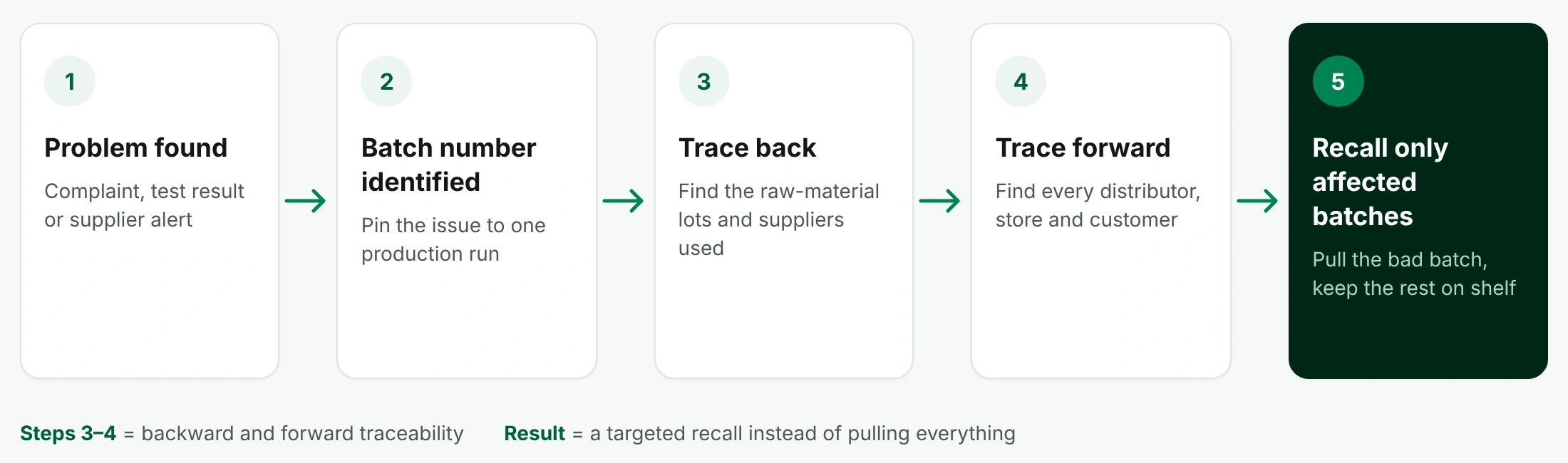
When a quality or safety issue occurs, its batch number helps manufacturers find out which products are affected and which are not. This helps businesses recall only the affected product instead of removing every product from the market.
For Shoppers: A 3-Step Check
-
Find the Batch Number
Look for the batch or lot number and date code printed on your product packaging.
-
Compare the Details
Check whether your product’s batch number, name, and pack size match the details in the recall notice.
-
Follow the Instructions
If your product is affected, stop using it and follow the instructions for returning or disposing of it.
For Manufacturers: 4-Step Check
-
Identify the Batch
Inspect the customer complaints, test results, or supplier alerts to find out which batch has a problem.
-
Trace Back
Find out which raw materials and suppliers were used to make the affected batch. Check whether those materials were also used in other batches.
-
Trace Forward
Find out where the affected products were sent, including the distributors, stores, and customers.
-
Take Action
Keep the affected product out of circulation, inform the customers and relevant authorities when required. Also, record the actions taken.
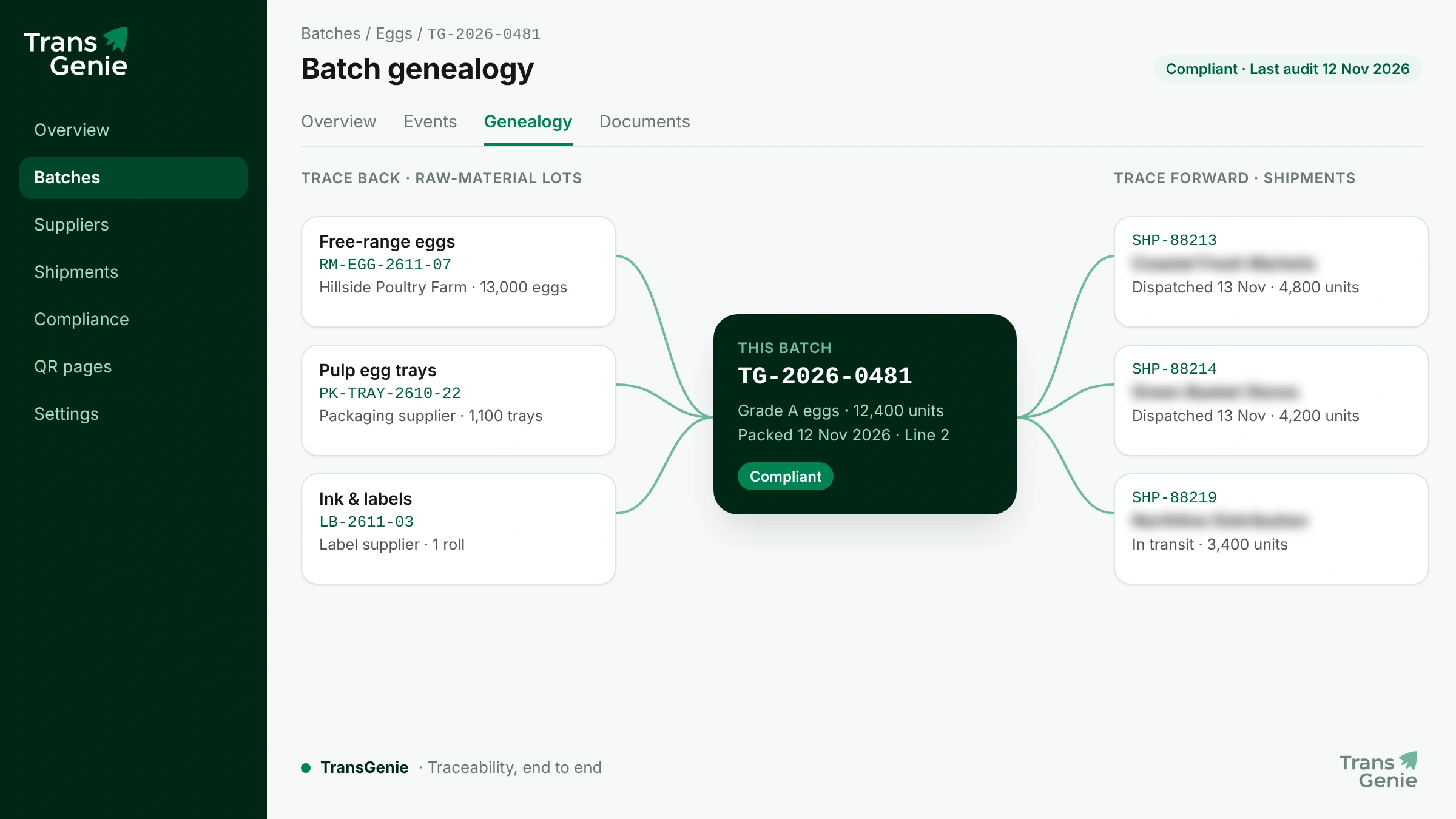
These steps are known as forward and backward traceability. In simple terms, backward traceability helps manufacturers find where a product came from, while forward traceability shows where it went. Managing this information through paper records can take days, whereas connected batch records make it much easier to find details and respond to recalls quickly.
How to Create a Batch Numbering System in 6 Steps
A well-planned batch numbering system helps manufacturers identify products and find the right records whenever an issue occurs. Here’s how you create a batch number for your product.
Choose What to Include
Decide which details the batch number should represent, such as the manufacturing location, production date, production line, shift, or run.
Create a Code Format
Decide the order in which these details will appear and keep the code structure consistent across all batches.
Assign Unique Numbers
Never assign the same number to two or more batches. If you produce multiple batches in a single day, use a separate running number to tell them apart.
Label Every Package
Ensure that the batch number appears on individual products, cartons, and pallets. You can also include it in barcodes using GS1 standards.
Connect Production Records
Link each batch number to the raw materials used, quality checks, storage details, and product shipments. This makes it easier to track products throughout the supply chain.
Run Regular Tests
Conduct a mock recall at least once a year to check whether you can quickly trace a batch back to its source and forward to the customers who received it.
Track Batch Numbers With TransGenie
Managing batch numbers becomes more challenging as production grows and moves across multiple locations. In that situation, keeping track of raw materials, production records, quality checks, and shipments through spreadsheets can lead to missing information and delays. This is mandatory, especially when a product recall is needed.
TransGenie’s batch tracking software brings batch creation, quality checks, digital labelling, and shipment records together in one place. This helps manufacturers trace products from raw materials to customers and quickly identify the affected batches when an issue arises. This also works alongside the existing ERP systems, making batch tracking easier to manage without disrupting current operations.
Want to see how batch tracking could work for your operation?
Book a demo to discuss your batch numbering, traceability, and recall needs with our team.

Yokesh Sankar