Who uses food traceability software?
Food manufacturers, processors, distributors, exporters, food brands, and logistics providers rely on food traceability software to manage traceability, compliance, recalls, and supply chain visibility.
How does TransGenie's food traceability software support FSMA 204 compliance?
Our platform helps businesses manage Critical Tracking Events (CTEs), Key Data Elements (KDEs), lot-level traceability, and electronic record-keeping to support FSMA 204 compliance efforts.
What are CTEs and KDEs?
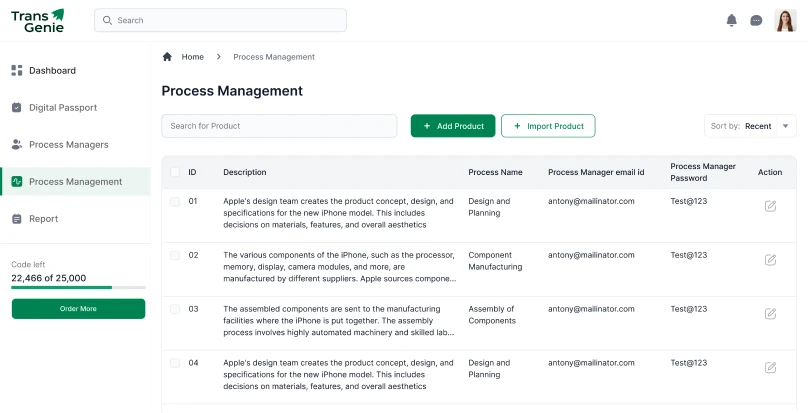
CTEs (Critical Tracking Events) are the supply chain points where food must be documented. KDEs (Key Data Elements) are the specific data captured at each - lot codes, quantities, dates, and locations. Transgenie captures both automatically.
Does the platform support global compliance requirements?
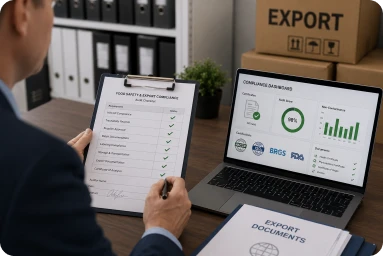
Yes. Our software helps businesses maintain traceability records that support compliance requirements across U.S., EU, Asia-Pacific, Middle East, and export markets.
How does food traceability software help during recalls?
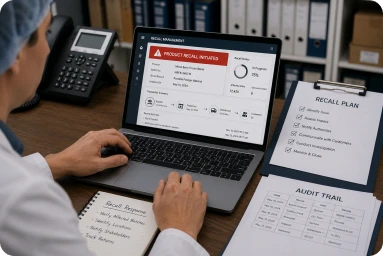
The platform helps teams identify affected lots, review product histories, and access traceability records needed during investigations and recall activities.
Can TransGenie support multi-facility operations?
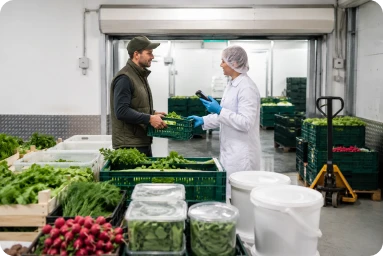
Yes. Our platform is designed to support traceability across multiple facilities, warehouses, suppliers, and distribution networks.
Can your platform integrate with ERP and warehouse management systems?
Yes. Our food traceability platform built at TransGenie supports integration with ERP, inventory, warehouse management, procurement, and other operational systems.
Is this suitable for small food manufacturers?
Yes. Small manufacturers on the FDA's Food Traceability List carry the same FSMA 204 obligations as large ones. TransGenie scales from single-facility operations to multi-site global businesses.
How long does implementation take?
Implementation of food traceability software takes a few weeks for smaller operations. For enterprise rollouts with ERP integration, it may take 3-6 months. A full implementations typically run 12–18 months for mid-size manufacturers.
What is food manufacturer compliance tracking software?
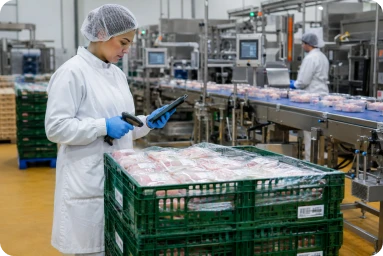
Food manufacturer compliance tracking software helps businesses manage traceability records, supplier documentation, audits, and regulatory requirements from a centralized system.
How does TransGenie support food supply chain transparency?
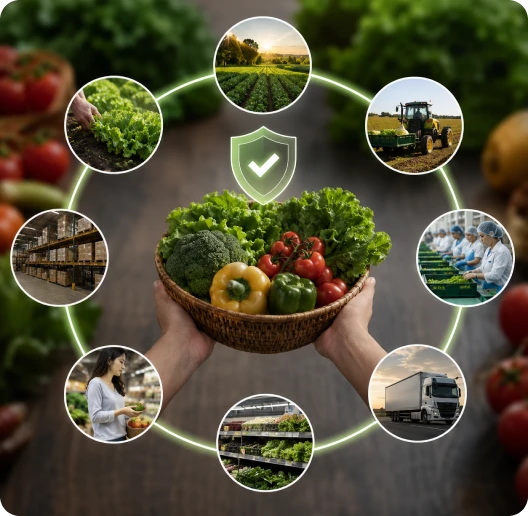
Our platform acts as food supply chain transparency software by connecting supplier, production, inventory, and distribution records into a single traceable system.
How do I get started with TransGenie?
Contact our team to schedule a demo and discuss your traceability, compliance, and operational requirements.
What are the latest technologies used in food traceability?
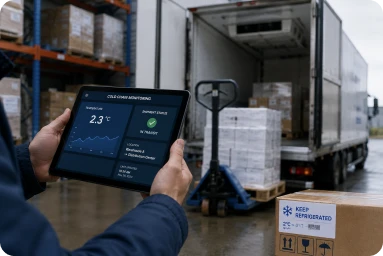
Modern food traceability uses technologies such as blockchain-backed records, AI-powered monitoring, ERP integration, and cold-chain tracking. TransGenie brings these technologies together to connect product and supply chain data in one platform.
Why is food traceability important in the supply chain?
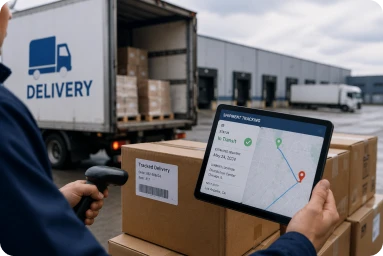
Food traceability gives businesses visibility into where products come from, how they move, and where they go. TransGenie connects supplier, production, inventory, and distribution records to provide a clear view across the supply chain.
Why is food traceability important for consumer trust?
Food traceability builds consumer trust by showing where products come from and how they move through the supply chain. TransGenie connects product and supply chain records to provide greater transparency from source to destination.