EUDR Compliance Software for Smarter Supply Chain Due Diligence
The EU Deforestation Regulation applies from 30 December 2026. TransGenie's EUDR compliance software helps you collect plot geolocation, assess supply chain risk, build due diligence statements, and keep the supporting evidence for five years.
Trusted by producers, processors, and exporters across food, agriculture, and manufacturing supply chains.
See how plot geolocation, deforestation risk assessment, and EUDR due diligence statement management work for your supply chains.




What is EUDR Compliance Software?
EUDR compliance software is a digital system that helps businesses collect, manage, verify, and retain the information needed to meet the EU Deforestation Regulation (EUDR) before the product enters the European Union. It brings supplier details, plot geolocation, traceability records, risk assessment, due diligence statements, and supporting evidence into one place.
The EU Deforestation Regulation (Regulation (EU) 2023/1115), amended by Regulation (EU) 2025/2650, covers seven commodities:
It also covers a wide range of products from these commodities, including chocolate, leather goods, furniture, paper, tyres, and beef.
What Does EUDR Compliance Require
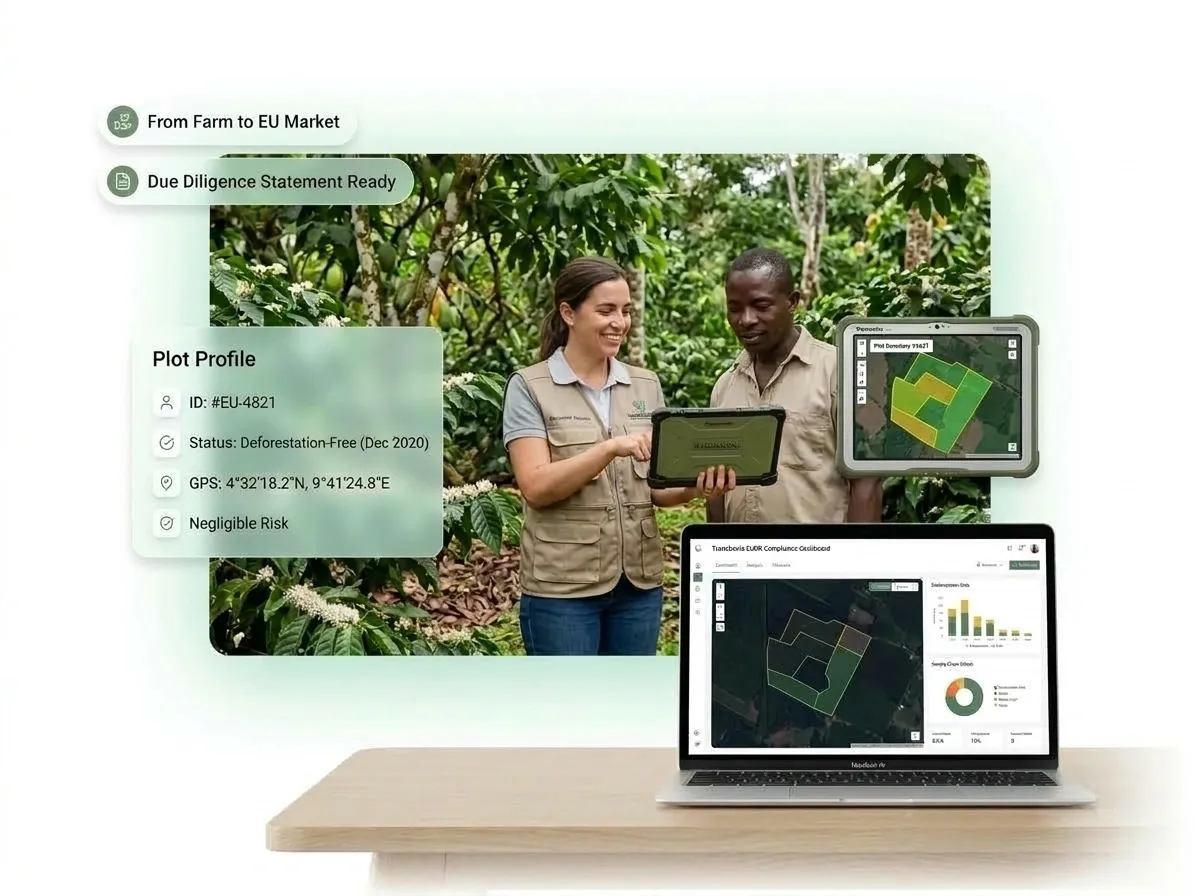
For an operator, EUDR compliance comes down to three core requirements:
Collect information
Collect the required product, supplier, production, and plot-level geolocation information.
Assess risk
Carry out and document a risk assessment to determine if the product may involve deforestation.
Complete due diligence
Submit the required due diligence statement and keep the supporting evidence and records.
The challenge is managing this information across a real supply chain
A single container of cocoa, for example, may contain product linked to hundreds of smallholder plots. Keeping all those coordinates, supplier records, risk assessments, and product links together can quickly become difficult when the information is present across spreadsheets, emails, and separate systems.
That is where EUDR software helps. It connects the information so your team can trace products back to their source, manage supplier data, assess risk, and keep the evidence linked to the relevant consignment.
Who Needs EUDR Compliance Software?
The EUDR application date depends on the type and size of business and the products being handled.
| Business category | Applies from |
|---|---|
|
Large and medium operators
|
30 December 2026 |
|
All downstream operators and traders, regardless of size
|
30 December 2026 |
|
Micro and small enterprises handling products previously covered by the EU Timber Regulation
|
30 December 2026 |
|
Micro and small operators handling all other products
|
30 June 2027 |
Being a small company does not automatically mean you have until June 2027. If you are a trader or downstream operator, the earlier date can apply regardless of your company size.
Keeping EUDR Compliance Records Connected and Ready
For businesses managing multiple suppliers, plots, commodities, or shipments, an EUDR compliance system can make it easier to keep the required information connected and ready for due diligence.
For Importers
Keep supplier, product, plot, risk, and due diligence information connected before covered products enter the EU market.
For Exporters
Connect the product to its source and provide the due diligence information required before export.
Key Features of EUDR Compliance Software
The right EUDR compliance system should make it easier to collect accurate supplier data, validate geolocation, assess risk, manage due diligence statements, and keep the supporting records organized.
Here are the core capabilities TransGenie provides:
| Feature | What it helps you do |
|---|---|
| Plot geolocation capture | Collect coordinates and plot polygons from suppliers in a validated format. |
| Supplier onboarding portal | Give producers a simple way to submit plot data for supplier due diligence across your supply chain. |
| EUDR deforestation monitoring | Check plot boundaries against forest cover data and the 31 December 2020 deforestation cut-off. |
| EUDR risk assessment software | Apply country benchmarking, commodity risk, and supply chain complexity when assessing risk. |
| Risk mitigation workflow | Record the actions taken when identified risk is more than negligible, including surveys, or supplier audits. |
| Due diligence statement builder | Build the due diligence statement from information already stored and manage the reference number. |
| Reference number register | Track reference numbers received from upstream suppliers and passed downstream. |
| Batch and lot linkage | Connect each consignment with the plots that supplied it, maintaining the link through the supply chain. |
| Five-year record retention | Keep due diligence statements, supporting evidence, and compliance decisions for the required retention period. |
| Audit export | Export the relevant evidence and records when they are requested by a competent authority. |
How Our EUDR Compliance Software Works
Our EUDR compliance solution works in four stages. Each one produces evidence that the next one uses.
Collect Supplier and Plot Data
Suppliers can submit plot coordinates through a portal, file upload, or connected system. TransGenie validates the data before accepting it, helping flag incorrect or incomplete information at the point of entry. This allows suppliers to correct issues early and reduces errors during final filing.
Assess Supply Chain Risk
Each plot can be checked against forest cover data and the EUDR deforestation cut-off date. Country benchmarking and commodity risk are also considered as part of the assessment. The result is a documented risk assessment that your team can trace back to the information used to reach the conclusion.
Mitigate Identified Risks
If the risk is more than negligible, document actions taken to address it, such as requesting supplier information, conducting independent surveys, or completing audits. Record the mitigation measures and supporting evidence, keeping them linked to the relevant supply chain record.
File and Retain the Records
Once the required information and risk assessment are in place, you can prepare the due diligence statement from the records already collected.
The statement reference number is linked to the relevant consignment, while the supporting information and compliance records are retained for five years.
Simplify Your EUDR Compliance Process
Keep supplier data, risk assessments, supporting evidence, and compliance records organized in one place for easier review and reporting.
How EUDR Supply Chain Traceability Connects Products to Their Source
EUDR is a traceability requirement before it becomes an environmental one. So, you need to show where a product came from and connect it back to the plots where the relevant commodity was produced.
TransGenie’s EUDR traceability software for supply chains links each finished consignment back to the plots that supplied it, including the different processing stages.
For example, a container of chocolate can be traced back to its cocoa lots; those lots can be traced back to the farms, and those farms are linked to their plot coordinates.
What Happens When Products are Mixed?
This is where supply chain traceability can get complicated.
When beans from 40 farms are combined into one fermentation batch, our software records the merge and keeps all plot references connected to the resulting batch.
The same principle works across other processing and supply chain stages. The connection that it has across the product, lot, supplier, and source plot stays with the record.
This is the same forward and backward traceability used for food safety, now applied to land and origin data for EUDR. It connects products with their source and supply chain records, making it easier to trace materials.
If you already maintain traceability records for other compliance or food safety requirements, those records can also support your EUDR process. Learn more about our supply chain traceability platform.
EUDR Geolocation & Farm-Level Traceability
Geolocation is where many EUDR programmes run into problems. The requirements are also more specific than many simple summaries suggest.
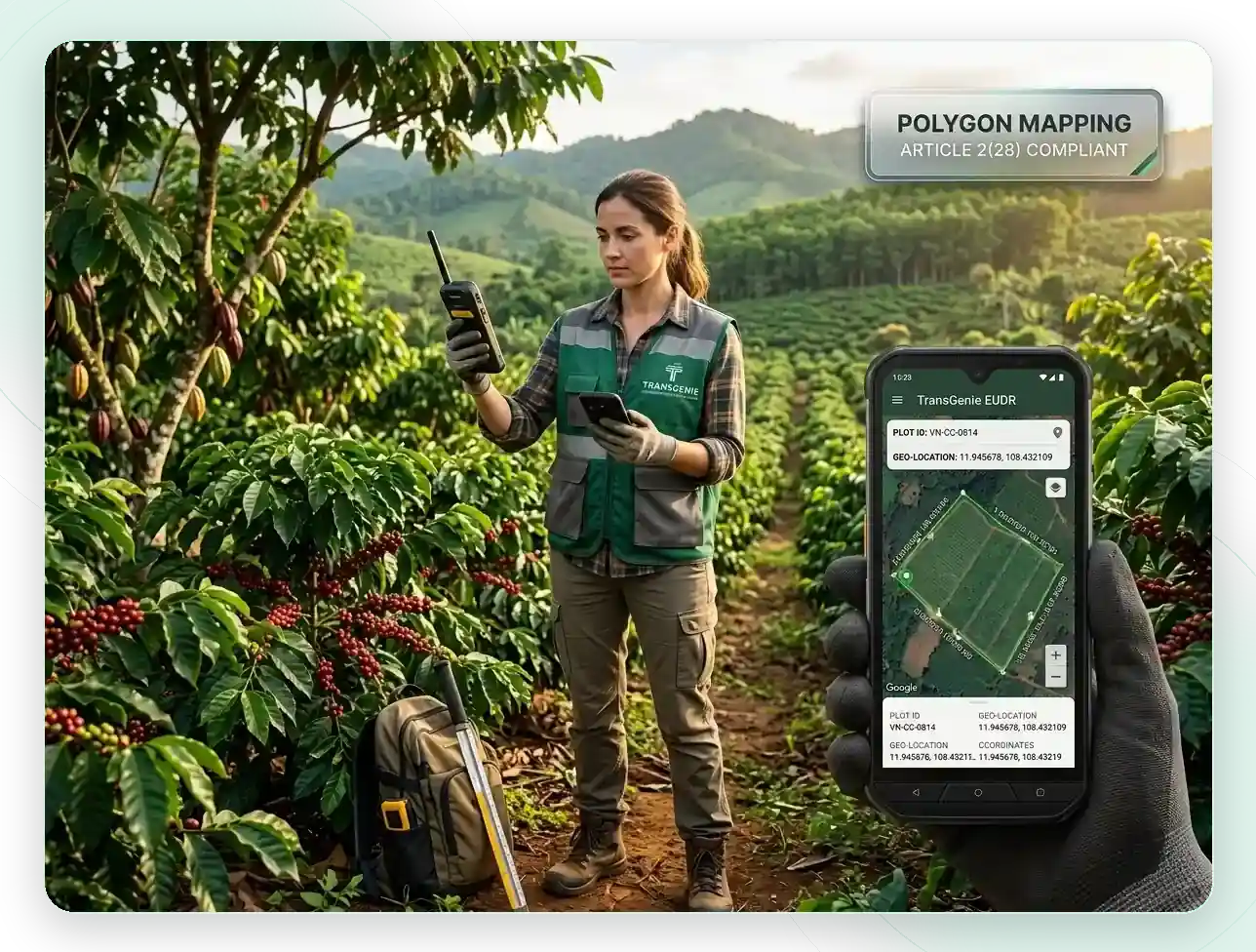
The definition of geolocation is set out in Article 2(28) of the regulation, rather than in the due diligence article where you might expect to find it.
| Requirement | What EUDR requires |
|---|---|
| Coordinate precision | Latitude and longitude to at least six decimal digits |
| Plots over 4 hectares | A polygon showing the plot perimeter, rather than a single point |
| Cattle | Excluded from the polygon requirement at any size |
| Cattle geolocation | The establishments where the animals were kept |
| Cattle scope | Geolocation applies cumulatively across the animal's life, from the birth farm to slaughter |
| Production date | Each plot must include the date or date range of production |
The four-hectare test applies to each plot, where a plot means land within a single real estate property as recognised under local law.
TransGenie provides EUDR compliance software with geolocation tracking to validate coordinate precision and polygon requirements when supplier data is submitted.
So, if a supplier enters coordinates with only four decimal places, the issue can be flagged before it becomes a problem during filing.
For businesses collecting this information directly from farms, our farm traceability software can help capture plot information at harvest.
How Does EUDR Risk Assessment
and Risk Mitigation Work?
EUDR due diligence Software is split across three key articles:
The goal is to reach a negligible level of risk. If the risk is not negligible, you need to take mitigation steps before the product can be placed on the EU market.
What Does EUDR Risk Assessment Need to Consider?
Your risk assessment should cover the key factors that may affect whether a product presents a deforestation or forest degradation risk. This includes the sourcing country, land characteristics, indigenous peoples, supply chain complexity, and the traceability of materials back to their origin.
- Country benchmarking under Implementing Regulation (EU) 2025/1093 including the country’s assigned risk level and any relevant conditions
- The prevalence of deforestation in the relevant area, including known deforestation or forest degradation concerns
- The presence of indigenous peoples and whether consultation has taken place, where applicable
- The complexity of the supply chain, including suppliers, intermediaries, production stages, and sourcing locations
- The risk of mixing with products of unknown origin or materials that cannot be reliably traced back to their source
Does a Low-Risk Country Mean You Can Skip EUDR Due Diligence?
No. A low-risk country classification does not remove all EUDR obligations.
Four countries are currently classified as high risk: Belarus, North Korea, Myanmar, and Russia. Around 140 countries are classified as low risk, including India and the United States. Brazil, Indonesia, and Malaysia are classified as standard risk.
However, low-risk classification only changes which parts of the due diligence process apply.
| What low-risk status changes | What it does not remove |
|---|---|
| Articles 10 and 11 can be waived under simplified due diligence | Article 9 information and geolocation requirements |
| Risk assessment and risk mitigation may not be required under the simplified process | The due diligence statement |
| — | Required record keeping |
Simplified due diligence is also conditional. You must first assess the complexity of the supply chain and the risk of mixing with products of unknown or higher-risk origin.
TransGenie applies the current country benchmarking list automatically and updates it when the European Commission revises the classifications.
How Does EUDR Due Diligence Statement Management Work?
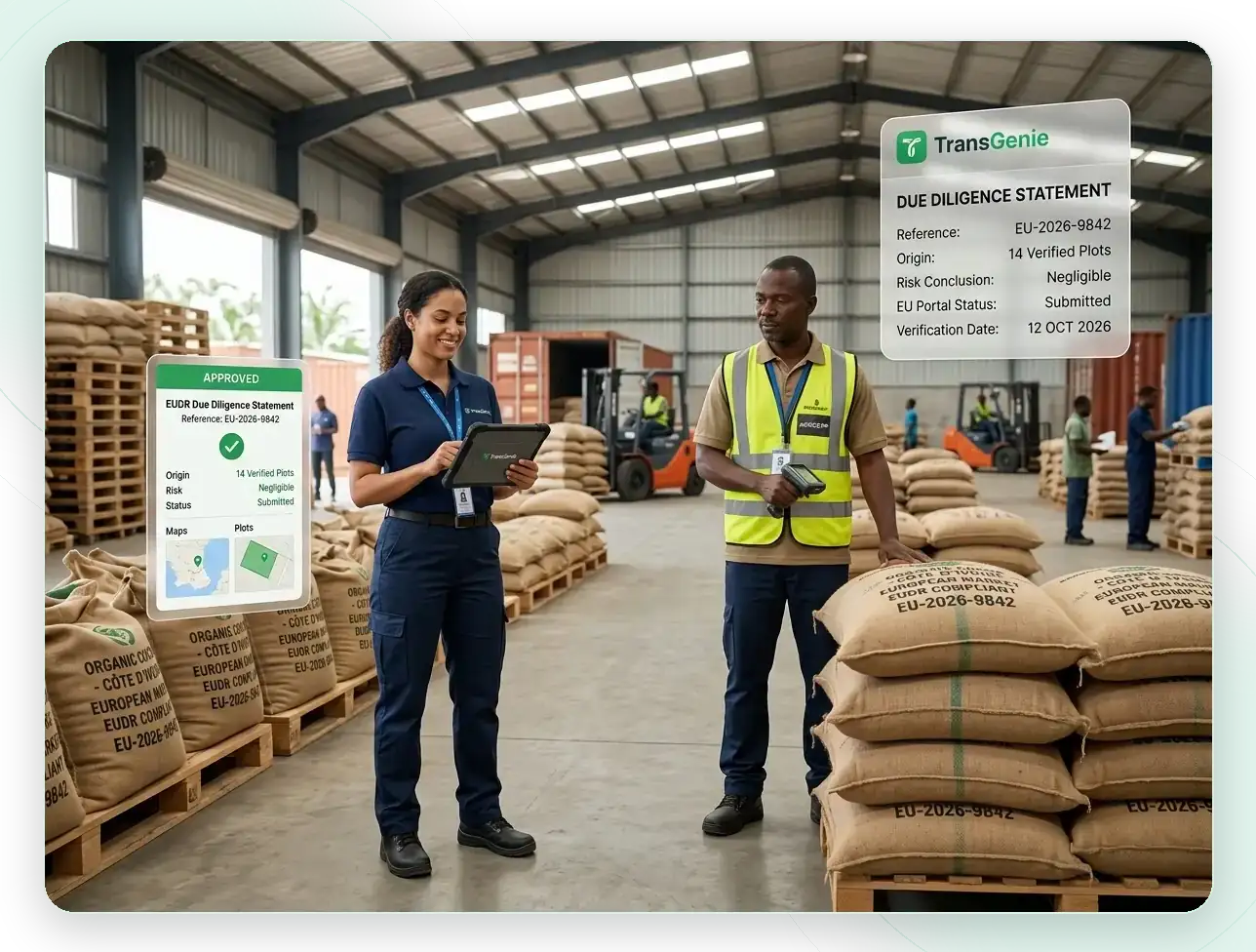
The due diligence statement is a key part of EUDR compliance. EUDR due diligence software helps companies prepare, manage, and retain the information behind each statement before a product is placed on the EU market or exported.
What the Software Handles
Assembly
There is no need to start from a spreadsheet for every shipment. TransGenie uses the information already collected in the system to prepare the due diligence statement.
Submission
Once the required information is ready, the statement can be filed through the EU information system before the product is placed on the market.
Reference numbers
Every filed statement gets a reference number. You can keep those numbers linked to the relevant records and pass them to customers or collect them from suppliers as needed.
The downstream position
If you are a downstream operator handling a product that is already covered by a due diligence statement, you do not file another statement. Instead, you collect and pass on the reference numbers and keep the required supplier and customer records for five years.
The Commission has confirmed that the downstream collection duty is passive. A downstream operator does not have to chase a supplier for a reference number and may presume it is not upstream if none is received.
Retention
Records are kept for five years. This includes statements, Article 9 information, risk assessments, mitigation decisions, and system documentation.
What EUDR Compliance Looks Like Across Different Commodities
EUDR does not work exactly the same way for every commodity. The products, traceability requirements, and common compliance challenges can vary depending on what you handle.
TransGenie is configured around the commodity being tracked rather than using one generic form for every supply chain.
The details can vary significantly depending on the commodity, product, and your role in the supply chain.
For a more detailed breakdown, see our EUDR compliance guide.
Which Industries Need EUDR Compliance?
EUDR can affect more industries than businesses directly working with raw commodities. The impact depends on the commodities and products moving through your supply chain.
Food and beverage
Cocoa, coffee, palm oil, and soya are used across a wide range of processed food products.
Meat and livestock
Cattle are directly covered, while soya can also bring EUDR requirements through animal feed.
Agriculture and farming
EUDR traceability starts at the farm, where plot-level geolocation needs to be captured.
Retail and brands
Downstream operators need to collect and pass on the relevant reference numbers.
Manufacturing
Rubber, wood, and palm-derived materials can appear in different components and products.
Furniture and paper
Many wood-based products fall within the scope of Annex I.
Textile and leather
Leather is left out of scope under a 2026 delegated act, while cattle itself remains covered.
Cosmetics
Palm oil derivatives can be used in cosmetic products and are easy to overlook.
Make EUDR Traceability Easier to Manage
Track product origins, plot coordinates, supplier information, and compliance records across your supply chain without scattered documentation.
EUDR Compliance Software Integrations
EUDR data usually sits across several systems you already use. Your compliance software should connect those systems rather than force you to replace them.
ERP
Purchase orders, suppliers, and batches
Warehouse management
Receipts, stock movements, lot splits, and merges
Supplier portals
Plot submissions, certificates, and declarations
Satellite and mapping data
Forest cover and land-use comparisons
GS1 and EPCIS
Event records and identification keys
Laboratory systems
Test results that support origin claims
Customs and trade platforms
Declarations and reference numbers
TransGenie is built on recognised traceability standards, so traceability records can move between supply chain partners without requiring bespoke mapping for every connection.
Benefits of EUDR Compliance Software
EUDR compliance involves a lot of information, and this is true when you are working with multiple suppliers, plots, products, and shipments. A connected system can make those details easier to manage.

Make filing easier
Filing becomes a report, not a project. Your due diligence statement can be built from the evidence that is already collected, instead of creating it manually for every consignment.

Catch incorrect data earlier
Bad data is usually found at entry. For example, a coordinate with only four decimal places can be flagged when a supplier submits it instead of being discovered just before shipment.
Keep track of suppliers
Suppliers are easier to manage. You can get details like which producers have submitted valid plot data and which ones still need to provide information before the season starts.
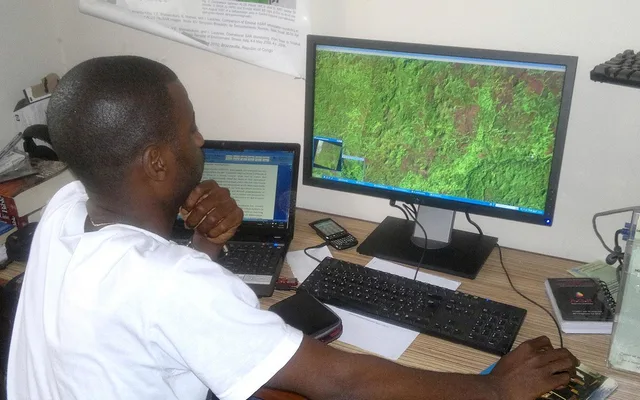
Keep the reasoning with the record
Evidence survives staff turnover. The reason behind a risk conclusion is recorded in the system rather than being left in someone's memory or scattered across emails.
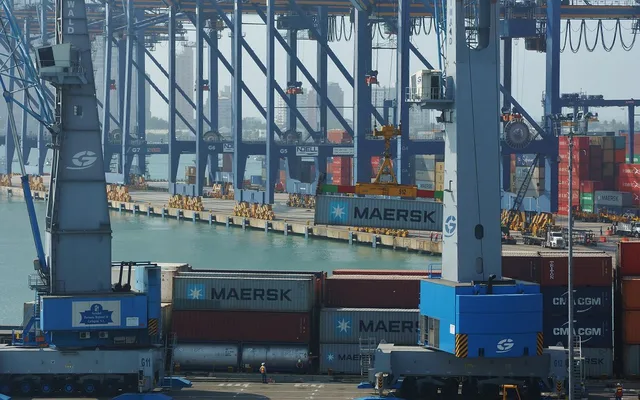
Respond faster to trace a product
Up to 80% faster recall response with connected traceability records. The same plot-to-consignment links used for EUDR can also help answer a food safety question.

One record across regulations
One record, several regulations. The geolocation and lot data collected for EUDR also supports FSMA 204 and digital product passport requirements.
EUDR Compliance Software vs. Manual Compliance
You can manage EUDR requirements manually, but the process becomes harder as the number of suppliers, plots, products, and shipments grows.
| Compliance Task | Manual process | EUDR compliance software |
|---|---|---|
| Plot data collection | Email and spreadsheets | Validated supplier portal |
| Coordinate checking | Visual inspection, if at all | Automatic checking at entry |
| Polygon requirement | Checked case by case | Applied based on plot size |
| Deforestation check | Manual map comparison | Automated against the cut-off date |
| Country risk | Looked up for each consignment | Applied using the current list |
| Risk reasoning | Kept in email threads | Recorded against the consignment |
| Statement assembly | Retyped for each shipment | Built from stored evidence |
| Reference numbers | Tracked in a spreadsheet | Registered and linked to records |
| Five-year retention | Shared drives and inboxes | Structured and easy to export |
| Authority request | Days spent reconstructing records | Evidence can be exported when needed |
The difference is not simply about reducing manual work. It is about whether your EUDR evidence is organized and connected in a form that can be retrieved when an authority asks for it.
Stay Ready for Every EUDR Requirement
Build a clear audit trail with centralized data, documented risk assessments, mitigation actions, and supporting evidence ready when needed.
Why Choose Our EUDR Compliance Software?
EUDR compliance works better when it is connected to the traceability data you already use. TransGenie is built around that idea rather than treating EUDR as a separate compliance form.
Built on a traceability platform, not just a compliance form
TransGenie already supports plot-to-shelf traceability across food, agriculture, and manufacturing supply chains. The same records can be used to support your EUDR requirements.
Configured for different commodities
Cattle, cocoa, coffee, palm oil, rubber, soya, and wood do not all follow the same EUDR rules. Our software is configured around those differences rather than putting every commodity into one generic template.
Validation happens when data enters the system
Supplier data were thoroughly checked when it is submitted. This helps catch potential issues such as incorrect coordinate formats before they become a problem during filing.
Built around recognised standards
TransGenie supports GS1-compatible records to help businesses exchange traceability information with trading partners without relying on custom data mapping.
Backed by an experienced product engineering team
TransGenie is built by Sparkout Tech Solution Pvt Ltd, founded in 2017, with more than 100 specialists and over 150 client projects delivered.
Frequently Asked Questions
See How EUDR Compliance Could Work for Your Supply Chain
30 December 2026 is 92 days away. See how your own suppliers, plots, consignments, and EUDR evidence can be mapped against the requirements.