HACCP Traceability Software for Real-Time Food Safety
Leverage TransGenie’s HACCP traceability software for your food business to pack products, monitor crucial safety data, simplify HACCP compliance, and trace issues quickly before they turn into costly recalls.
See how real-time CCP tracking, batch genealogy, and automated compliance records work for your food operations.




Why Food Safety Teams Are Switching to Digital HACCP Traceability
In 2026, many businesses are replacing manual HACCP records with digital food traceability systems that make it easier to track critical control points and produce compliance records when needed.
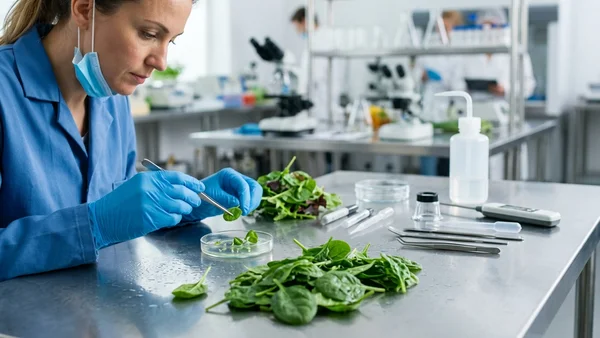
Manual Tracking Problem
48 hours to trace the contamination can lead to 2 days of delayed action. One missed entry can leave the critical information behind and make audits take longer.
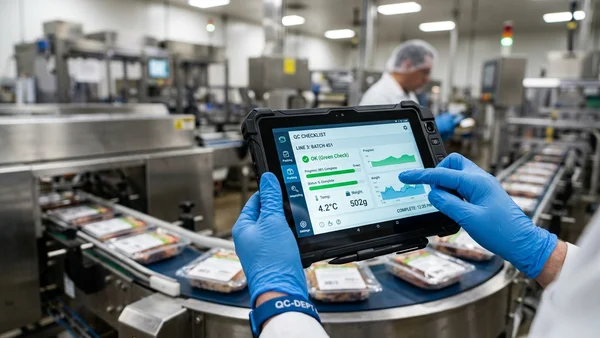
Recall Response Nightmare
When the FDA calls about contamination, you may have hours to respond. But digital HACCP traceability helps you find affected products and act faster.
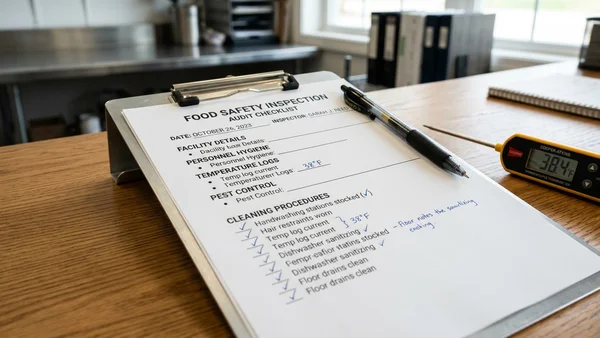
Hidden Compliance Risk
FSMA, FDA Food Traceability Rule, and ISO 22000 all rely on accurate records. Here, one missing document can create audit issues that you forgot to spot.
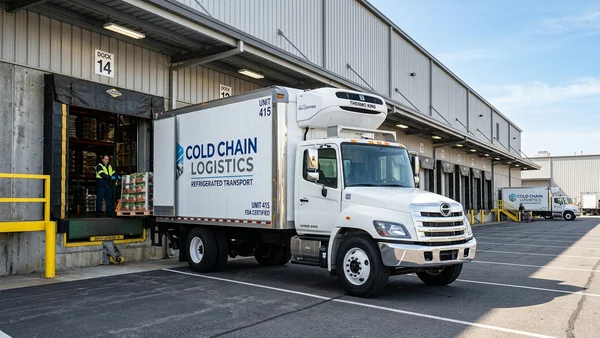
Supply Chain Blind Spots
A single missing certificate or temperature alert can leave a critical gap. Only connected records can help you find the right information without digging through spreadsheets.
What is HACCP Traceability in Supply Chain?
HACCP traceability combines food safety monitoring with product tracking in a single digital HACCP food safety system. It helps teams track key data, spot hazards, and keep compliance ready when needed.
The Short Definition
- HACCP = Hazard analysis Critical Control Points (the regulatory framework)
- Traceability = Knowing exactly what went into your product and where it comes from.
- Together = They create a clear digital record of ingredients, processes, temperatures, and key decisions.
The FDA Food Traceability Rule (FSMA 204) requires covered businesses to provide traceability information during a food safety event. Digital HACCP record keeping makes it easier to capture, organize, and retrieve that information quickly. Here’s why the regulators demand it the most:
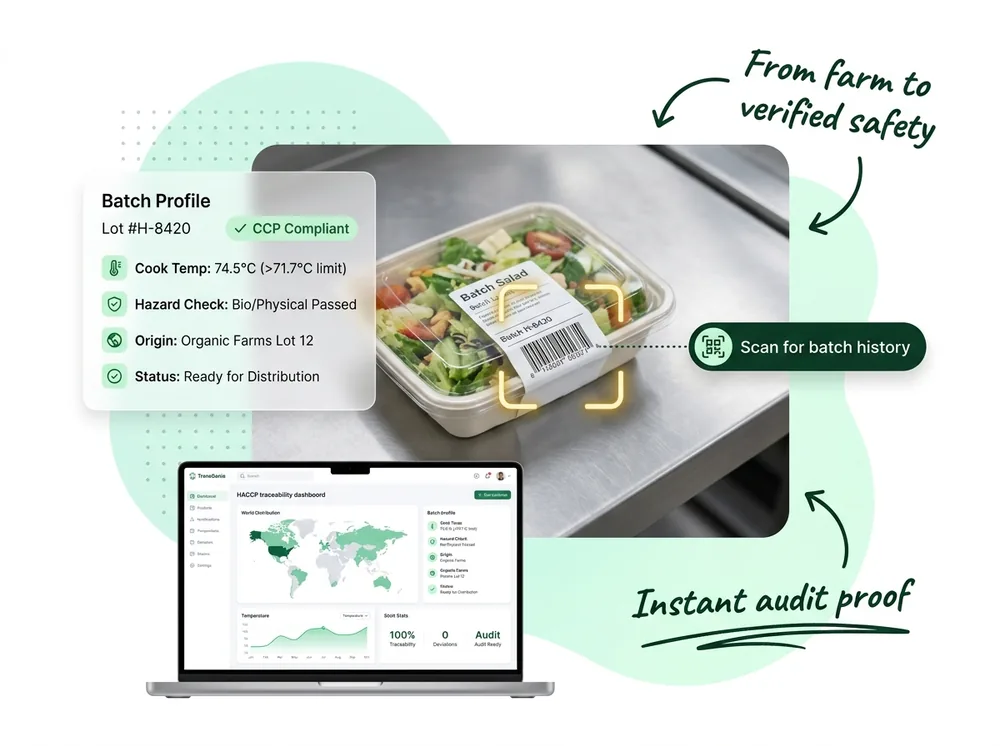
End-to-End Visibility
Supplier raw materials processing finished product distribution. Every stage is recorded, making it easier for your teams to trace products and find where the issue actually started.
Hazard Control
Monitor critical control points and get alerts when conditions move outside set limits. Whether it's a temperature drop or humidity spike, your team can respond before the issue grows.
Compliance Proof
Keep the safety checks, records, and verification details organized in one place. Whenever the auditor asks for proof, the information about that product is ready to review.
The 7 Principles of HACCP Explained
Learning about HACCP may sound complex. But its 7 principles provide a clear framework for managing food safety, and TransGenie’s digital tools make it easier to apply, track, and maintain each one.
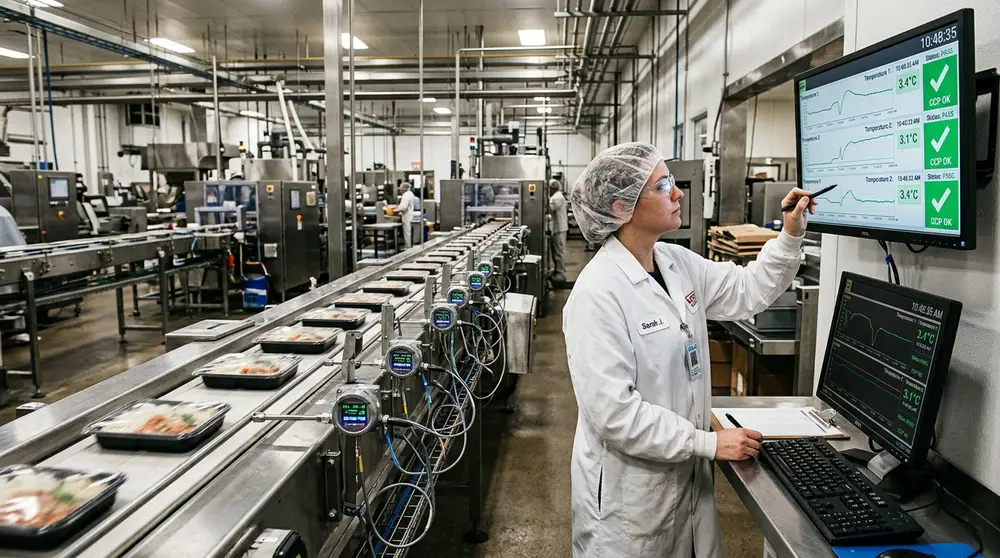
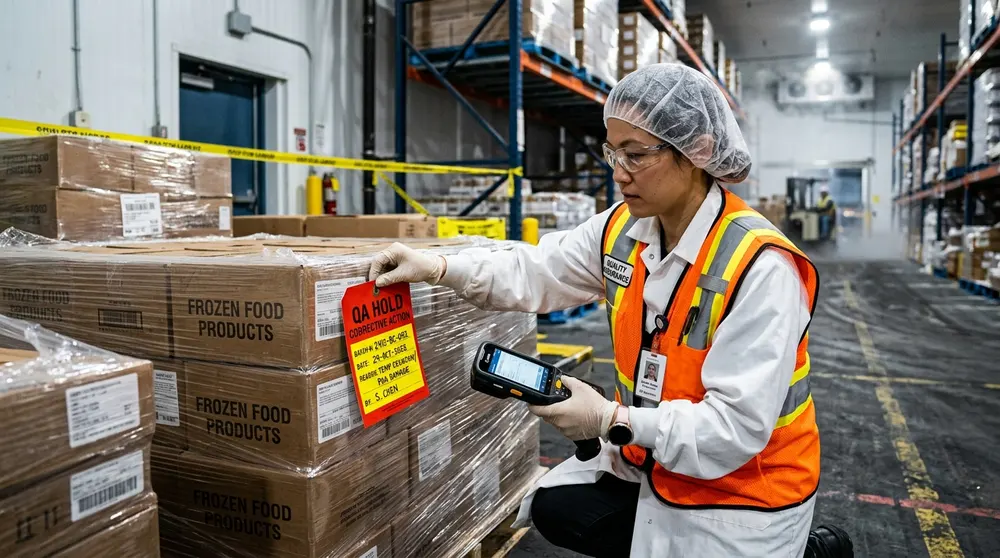
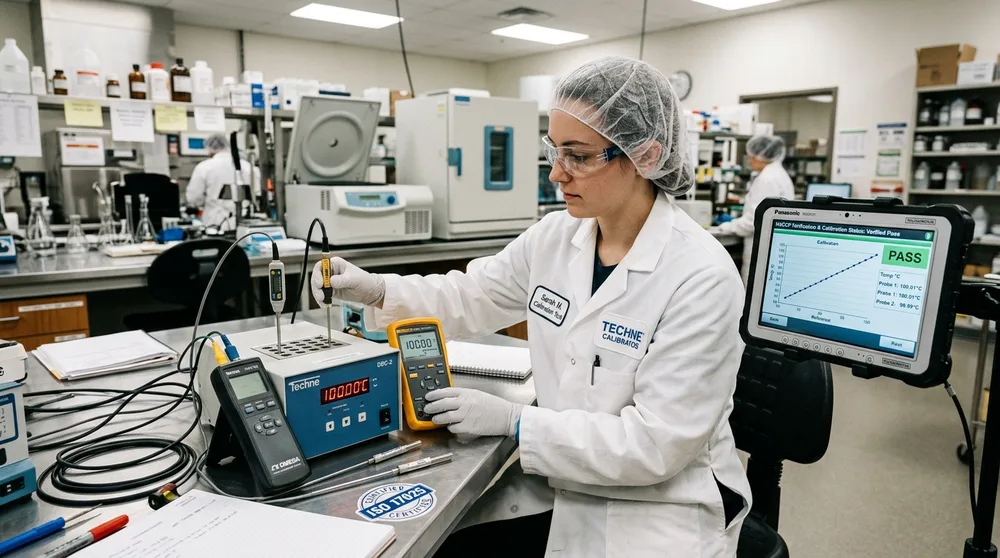
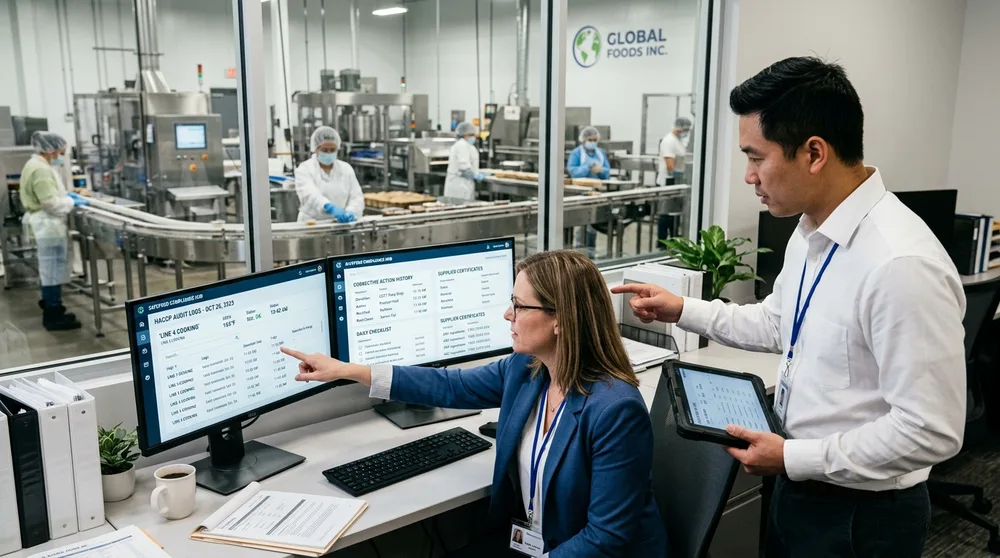
Principle 1: Hazard Analysis
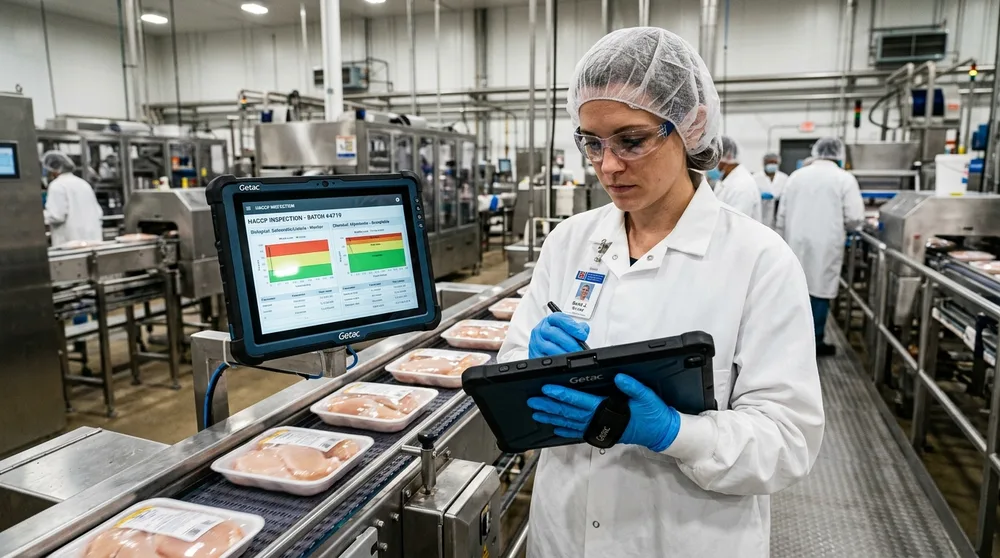
Identify biological, chemical, and physical hazards in each process step. Assess risks using your actual process instead of relying on a generic checklist.
Principle 2: Critical Control Points
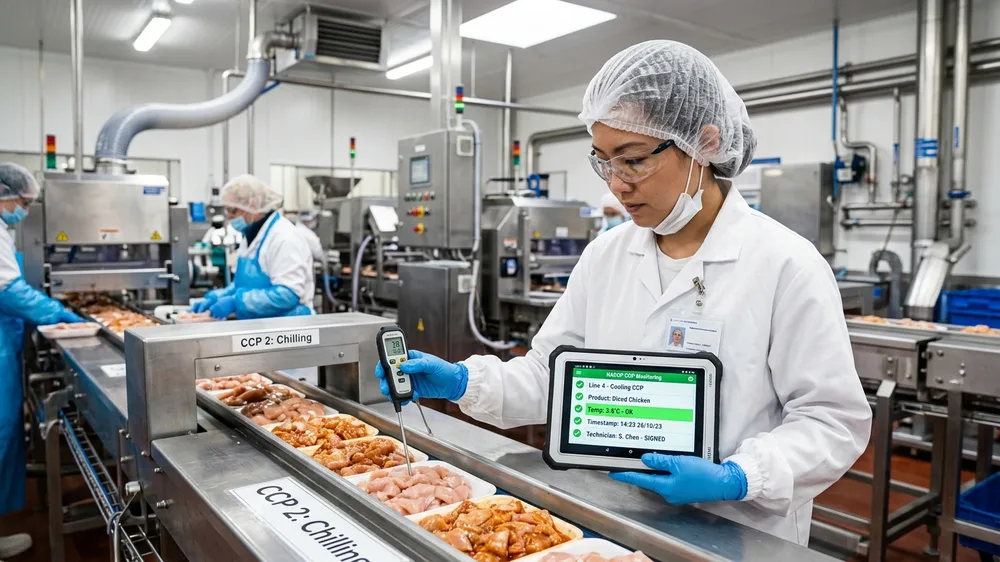
Find the steps where hazards must be controlled, such as pasteurization or allergen separation. These become your critical control points.
Principle 3: Critical Limits
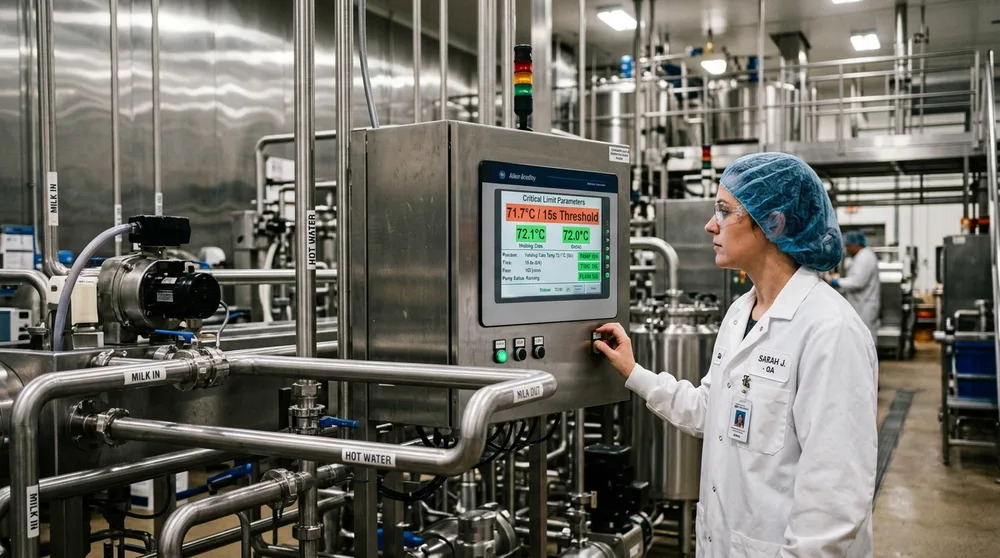
Set measurable limits for each CCP, such as 71.7°C for 15 seconds during pasteurization. Alerts flag readings that fall outside the approved range.
Principle 4: Monitoring
Check CCPs at the required frequency instead of relying on scattered entries. The sensor data can capture the readings automatically and record them with timestamps.
Principle 5: Corrective Actions
When a CCP exceeds its limit, record the issue and the necessary action taken. Document whether the batch was reprocessed, held, or discarded.
Principle 6: Verifications
Confirm that your HACCP controls are working through calibration, testing, and scheduled reviews. Keep the verification results linked to the relevant records.
Principle 7: Record-Keeping
Store the temperature readings, corrective actions, and supplier certificates together. Searchable digital records make the required documents easier to retrieve.
How Does HACCP Traceability Actually Work with TransGenie
Our HACCP traceability software follows a structured process to keep the food safety data captured, monitored, and traceable. Here’s how the process goes from start to finish.
Capture Your Data
IoT sensors capture readings from thermometers, scales, and lab equipment automatically, eliminating manual logbooks.
Connect Your Systems
Bring the supplier data, batch IDs, ERP records, and QA results together for one up-to-date review of your operations.
Monitor for Issues
The system checks readings against HACCP limits in real time and alerts your team when pH or temperature move out of range.
Trace Affected Batch
Trace any batch to see its ingredients, processing records, and shipping details without digging through spreadsheets.
Respond to Recalls
Identify the affected batches and their destinations quickly so your team can isolate products and start the recall process sooner.
Generate Your Proof
Generate CCP monitoring, corrective action, and HACCP reports in a few clicks without scrambling through scattered records.
Key Features of HACCP Traceability Software
TransGenie brings essential features together in a single connected platform with HACCP compliance software built for food safety teams. Manage daily HACCP processes with less manual work and clearer oversight.
Real-Time Monitoring
- Automatic CCP logging from connected sensors
- Instant alerts when temperature limits exceeds
- Deviation tracking with corrective action records
- Mobile access for staff to complete safety checks
- Real-time dashboard for quick facility oversight
Traceability & Recalls
- Quickly identify and isolate affected products
- Manage supplier and consumer notifications
- View complete lot history and relationships
- Trace batch forward and backward in seconds
- Scan barcodes during receiving and shipping
Compliance & Documentation
- Hazard analysis templates for different products
- Support for FDA, FSMA, and SQF requirements
- Track staff training and competency records
- HACCP software to keep records organized
- Manage supplier certificates and verification records
Integration & Data
- Send alerts through email or SMS
- Integrate scales and lab equipment
- Connect with your ERP and production systems
- Set role-based access for different teams
- Export records to Excel or PDF when needed
Benefits of HACCP Traceability Across Every Food Industry
See how digital HACCP traceability can simplify daily food safety work and reduce the time spent on manual tasks.
Fewer Audit Surprises
Stop hunting for missing documents before an audit; with organized records, it's easier to answer questions and show what’s done.
Clear Staff Workflows
Give staff clear digital tasks for checks and approvals, so they know what to do at each step without missing entries or getting confused.
Better Supplier Visibility
Track certificate expiry dates and test results in one view, making potential issues easier to spot before they affect production.
Greater Compliance Confidence
Keep a clear history of food safety traceability activities, giving your team the records needed to support its process during reviews.
Lower Operating Costs
Minimize the time spent on paperwork and manual follow-ups, while faster investigations and simpler edits help cut operational costs.
HACCP Traceability for Different Food Industries
Different food products come with different safety risks. Our HACCP traceability adapts to the process, hazards, and compliance needs for each operation.
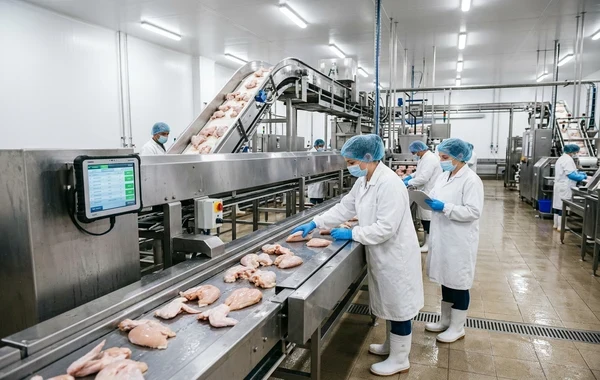
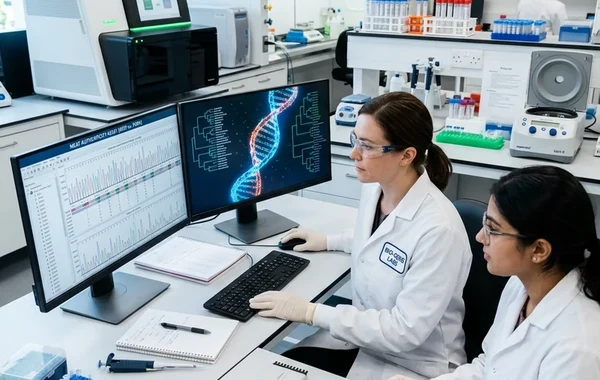
Meat & Poultry Processors
Control processing temperatures, cross-contamination risks, supplier records, and lot tracking across every production stage.
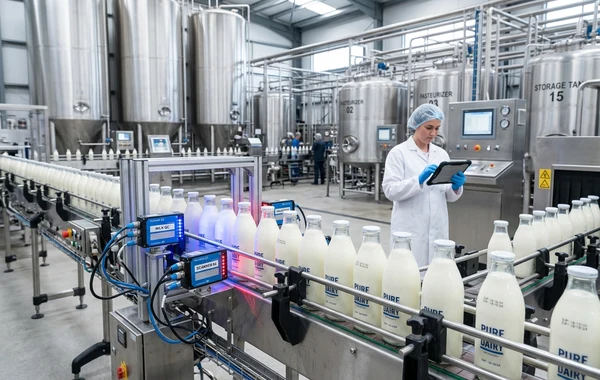
Dairy Manufacturers
Manage the pasteurization checks, cold chain records, and cleaning validation from milk intake to finished products.

Fresh Juice & Beverages
Track the pathogen controls, pasteurization or HPP checks, ingredient sources, and shelf-life data for each production run.
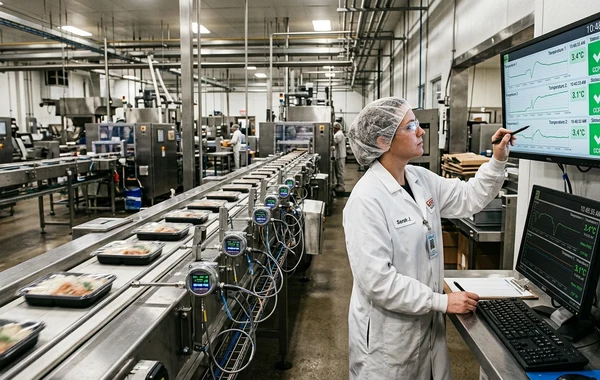
Prepared Foods & Delis
Manage the time and temperature controls, supplier records, and cross-contamination checks for ready-to-eat foods.
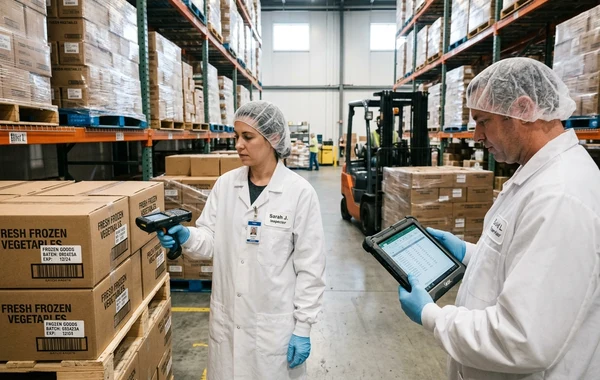
Frozen Foods
Monitor the freezing conditions, cold storage, allergen controls, and raw material records throughout frozen food production.
Specialty & Allergens
Manage allergen inventories, supplier testing, cleaning checks, and cross-contact controls for safer speciality food production.
Industry-Specific Compliance
TransGenie comes with templates for the following:
HACCP Traceability Software vs Manual Tracking: What’s the Difference?
See the difference between scattered spreadsheets and a food safety management system that is built to keep food safety connected, searchable, and ready when needed.
| Capability | Spreadsheets | TransGenie’s HACCP |
|---|---|---|
| Recall Speed | Hours or even days to manually trace affected batches | Find affected batches in less than 10 minutes |
| Data Accuracy | ~80-85% accuracy due to manual entry | 99.9% with automated IoT data capture |
| Audit Readiness | Start scrambling for records 1 week before an audit | Reports were ready in minutes, won’t take days |
| Staff Workflows | Ongoing training as staff turnover requires retraining | Self-guiding workflows reduce training time |
| Supplier Verification | Manual emails and calls every year | Automatic prompts and certificate expiry date |
| Temperature Monitoring | Manual spot checks, often three times daily | Continuous 24/7 monitoring with necessary alerts |
| Compliance Proof | Records scattered across papers and spreadsheets | Timestamped, organized records in one place |
| Recall Costs | $140k-$200k+ when response and tracing take longer | $20k-$40k with faster response and tracing |
How HACCP Traceability Helps With Food Recalls: A Practical Example
Whenever a food safety issue hits, every minute matters. In those times, HACCP helps your team identify affected batches, notify the right customers, and document the recall without digging through spreadsheets.
Recall Scenario: Supplier Contamination Detected
- 8:00 AM FDA calls about supplier contamination
- 8:05 AM You start checking spreadsheets to find affected batches
- 10:00 AM You identify 12 affected batches after checking multiple records
- 12:00 PM You start contacting customers through calls and emails
- 2:00 PM The product recall begins
- 6:00 PM The recall is now circulating on social media
- 8:00 PM Your team is still handling customer concerns and follow-ups
- 8:00 AM FDA calls about supplier contamination
- 8:05 AM Trace the affected supplier and identify 12 related batches in minutes
- 8:10 AM Notify the right customers and teams with the recall details
- 8:45 AM Submit the document with the required records already organized.
- 12:30 PM The affected products are identified, contained, and being managed
The Financial Reality
A food recall can quickly add up across multiple areas. Here’s an approximate estimate.
HACCP Traceability Software Integration With Existing Systems
In a supply chain, it’s mandatory to keep your existing equipment, software, and workflows connected. TransGenie connects your HACCP data across the systems you already rely on, without constant replacement.
Your Current Equipment
Link sensors, scales, thermometers, lab systems, and other equipment to capture safety data automatically. Reduce manual effort and keep readings synced in real time.
Your ERP or MES
Connect your existing inventory, production, and quality systems with TransGenie. Keep the HACCP data aligned without replacing the systems your teams already use.
Your Suppliers
Give suppliers a direct way to submit certificates, test results, and other compliance records. Keep the supplier documentation organized without missing expiry dates.
Secure Data Protection With TransGenie
Your HACCP data deserves strong protection and easy access. For that, TransGenie keeps your business information safe under your control.
Enterprise-Grade Security
TLS 1.3, AES-256 encryption, AWS infrastructure, and automatic backups help protect your data.
Compliance Certifications
Support GDPR, CCPA, and SOC 2 Type II requirements with regular security testing and audits.
Access Controls
Manage team permissions, enable multi-factor authentication, and track access through audit logs.
Data Ownership
Your data stays with you. Export records whenever needed without unnecessary platform lock-in.
Why Choose TransGenie Over Manual Systems
Every vendor makes big promises, but TransGenie focuses on what matters in real food operations. Practical workflows, faster implementation, and predictable costs are what make us stand out from others.
Built for Food Operations
Built around food processing needs, TransGenie supports daily production workflows and practical challenges your team faces.
Faster Implementation
Get started in just 4-6 weeks instead of 6-12 weeks, with pre-built templates for 20+ food types and less reliance on lengthy consulting.
Simpler Workflows
An intuitive, mobile-first interface that helps staff complete food safety traceability tasks with less training, even during busy production shifts.
Predictable Pricing
Keep the costs clear with monthly pricing, no per-facility surcharges, and fewer consulting expenses as your operations expand.
Frequently Asked Questions
See your HACCP traceability workflow in one connected system.
Walk through monitoring, batch tracing, corrective actions, compliance, or recalls based on the part of your operation you want to improve.