For wineries, importers & merchants
Provenance you
can't forge.
can't forge.
Blockchain traceability for wine that lives or dies on its story. Every Wine, vintage, tank, cork, bottle — verifiable from the slope it grew on to the cellar where it rests.
Wine to bottle
Anti-counterfeit
DOC/AOC compliant
Capabilities
Four stages. One
unbreakable provenance.
unbreakable provenance.
From the Wine's GPS coordinates to the collector's cellar — every harvest, every fermentation curve, every barrel rotation, every bottle number, immutably recorded.
01
Wineyard
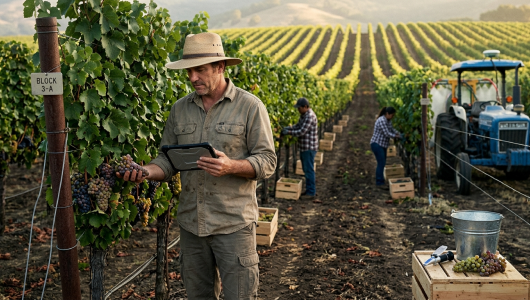
Wineyard, digitized to the row
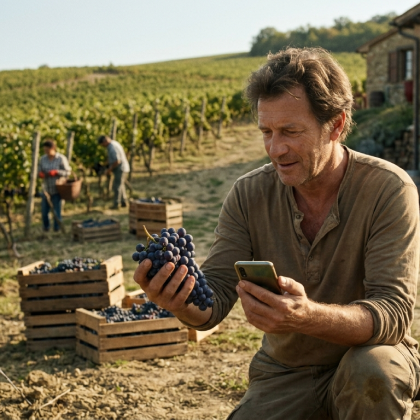
GPS-pinned blocks, clone records, canopy data, spray logs, harvest timestamps. Every grape entering the winery carries its exact origin, verified from the slope it ripened on.
Block-level GPS and varietal records
Harvest date, brix, yield per row
Spray logs & organic/biodynamic certifications
02
Vinification
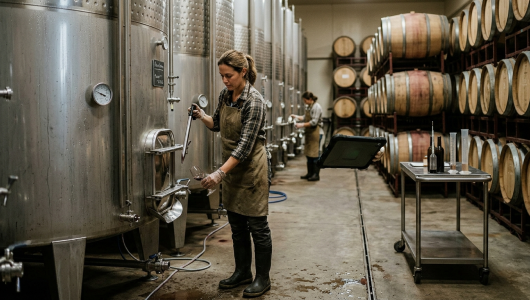
Fermentation, tank by tank
Tank numbers, temperature curves, yeast strains, malolactic events, barrel rotations, blend ratios. The winemaker's full notebook, timestamped and verifiable.
Tank-level fermentation logging
Barrel provenance & aging records
Blend ratios with varietal traceability
03
Bottling
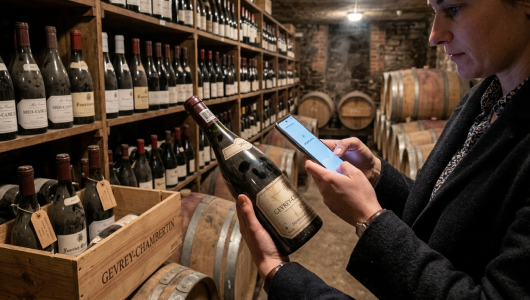
Each bottle, individually numbered
Unique NFC/QR identity at bottling. Counterfeit bottles can't replicate the on-chain record. Distributors, retailers, collectors can verify any bottle, anywhere, instantly.
Unique bottle identity (NFC + QR)
Counterfeit detection on scan
Cellar temperature tracking during storage
04
Consumer
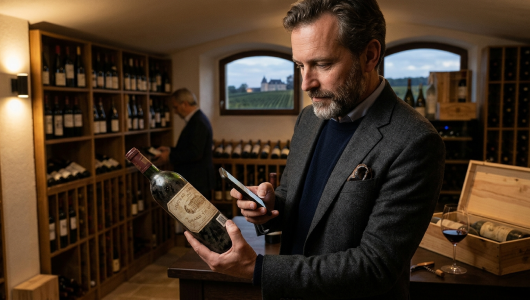
The story, in the collector's hand
Scan and see the exact Wineyard block, the winemaker's notes, the barrel history, the unbroken cellar chain. Every bottle becomes its own origin story — and every scan becomes first-party data for the winery.
White-label winery story page
Authenticity check for secondary market
Geotagged scan analytics for the winery
The operator view
Every tank, every barrel,
every vintage. One place.
every vintage. One place.
Your winemaker's notebook, your cellar logs, your bottling records, your export paperwork — unified in a single dashboard built for the rhythm of the winery year.
app.transgenie.io/wine
Stonehaven Winery · Estate Cellars
Dashboard
Export
+ New lot
Active tanks
32fermenting
Barrels aging
847+24
Bottles issued
128k2024
Scans this month
4,210+18%
Active tanks & barrels
View all ›
Tank 07
Cab Sauv · Block 3
24.6°C
Fermenting
Tank 12
Merlot · Block 1
23.1°C
Fermenting
Barrel Row A
Reserve Cab · 2022
14.2°C
Aging 18mo
Barrel Row C
Chardonnay · 2024
13.8°C
Resting
Recent vintages
All ›
Reserve Cab
2021
Bottles issued12,480
Scan rate14.2%
Hillside Syrah
2022
Secondary scans482
Auth. rate99.8%
Compliance
Geographical indicators,
protected on-chain.
protected on-chain.
Wine's compliance is about provenance proof: appellations, geographical indicators, and regional designations. Transgenie turns your label claims into verifiable records that regulators, retailers, and collectors can trust.
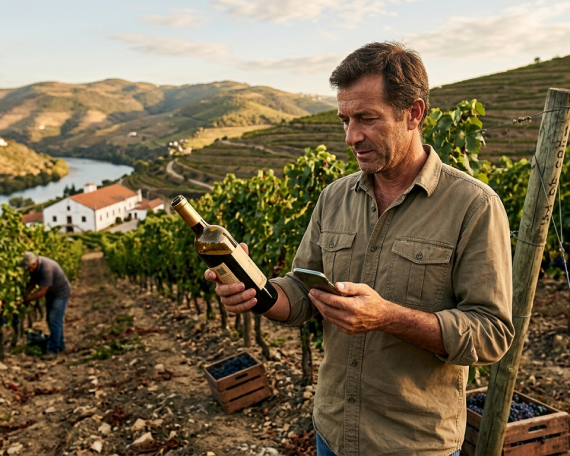
Every market
BRCGS Issue 9
Global
Covers wine under Category 13 — required by major retailers like M&S and Tesco
HACCP
Global
Hazard analysis for fermentation, bottling, and sulphite management
ISO 22005
Global
Food chain traceability standard — one-up-one-down vintage tracking
FSSC 22000
Global
GFSI-benchmarked scheme, widely used across bottling facilities
GS1
Global
Global identification for SKU, lot, and serial-level bottle tracking
OIV Standards
Global
International Organisation of Wine & Wine standards for practices and labeling
Region of origin
AOC / AOP
France
Appellation d'Origine Contrôlée — Bordeaux, Burgundy, Champagne protected designation
DOC / DOCG
Italy
Denominazione di Origine Controllata — Chianti, Barolo, Brunello protected
DO / DOCa
Spain
Denominación de Origen — Rioja, Priorat, Ribera del Duero protected origins
AVA
United States
American Viticultural Areas — Napa, Sonoma, Willamette Valley designations
GI
Australia
Australian Geographical Indications — Barossa, Margaret River, Hunter Valley
WO Scheme
South Africa
Wine of Origin certification — Stellenbosch, Paarl, Constantia regional proof
Export-ready
TTB COLA
United States
Certificate of Label Approval — mandatory for US wine imports and interstate sales
EU 1308/2013
European Union
EU wine law covering labeling, GIs, and authorized oenological practices
EU 2019/33
European Union
Wine labelling — allergen declaration, vintage, varietal claims
WSET Assurance
Global
Wine & Spirit Education Trust standards frequently referenced in premium trade
Organic / Biodynamic
Global
EU Organic, USDA Organic, Demeter Biodynamic chain-of-custody tracking
Sustainable Wine
Global
Sustainable Winegrowing NZ, Napa Green, CCSW and equivalent regional programs
What changes
A counterfeit bottle hits
the secondary market.
the secondary market.
A collector pays $480 for what looks like a 2015 Reserve. The auction house says genuine. The cork says genuine. But something's off. Here's what happens next — before and after Transgenie.
Before
Doubt, denied.
The collector calls the winery. The winery has no way to verify without opening the bottle.
The next 2 months
Week 1
Collector shares photos. Winery staff compare to old production records — labels match "close enough."
Week 2–4
Auction house pushes back. No way to prove counterfeit without chemical analysis. Collector's reputation on the line.
Week 5–8
Lab analysis ordered. Bottle sacrificed. Results inconclusive. Dispute escalates.
Eventually
Claim quietly settled. Winery unable to trace how many counterfeits exist. Brand quietly erodes.
2 months
To resolve one bottle
Unknown
Counterfeits in circulation
With Transgenie
Proof, in a scan.
The collector scans the QR on the capsule. Transgenie flags it instantly.
The next 30 seconds
+2 sec
Scan returns "No authentic record" — the serialized bottle ID isn't in the winery's chain.
+10 sec
Dispute portal auto-opens. Winery receives immediate alert with photo and GPS of the scan.
+1 min
Auction house notified. Bottle pulled from catalog. Collector credited automatically under provenance guarantee.
Same day
Winery identifies geographic pattern — 14 counterfeits detected across 3 cities. Investigation launches.
2 sec
To verify authenticity
100%
Counterfeit visibility
Frequently asked
Vintage, appellation, authenticity.
The wine questions, answered.
The wine questions, answered.
Practical answers from conversations with winemakers, importers, and merchants worldwide.
Do we need to change our bottling line?
No. Transgenie adds a unique QR or NFC tag to your existing labels or capsules. Your current bottling partner integrates it without line modifications — most deployments finish within 2–3 weeks of existing label cycles.
Can collectors verify bottles on the secondary market?
Yes — this is the core use case. Any future owner scans the bottle QR to verify authenticity, check cellar history, and view the winery's provenance record. The winery earns first-party scan data every time the bottle changes hands.
How do you handle our estate's organic / biodynamic claims?
Your certifying body's audit records sync directly. EU Organic, USDA Organic, Demeter Biodynamic — all display on the consumer scan with chain-of-custody from Wineyard block to bottle.
Will this work with small-batch limited releases?
Especially well. Each bottle gets a serialized identity — perfect for 500-bottle vintages where every bottle has individual provenance and market value. The scan experience can be richer for limited releases too.
Does the consumer need an app to scan?
No. Any phone's camera opens the QR link directly — no app, no signup. Your branded winery page loads instantly with the full story.
What happens to bottles we've already released?
We focus on current and future vintages — retrofitting past releases is rarely cost-effective. But you can add digital provenance for vintages still in your possession or returning from the market.
How do you protect the winemaker's proprietary notes?
You control what's public. Tank temperatures and blend ratios stay private in the winery database — only the consumer-facing story (vintage, Wineyard, tasting notes) goes to the scan page. Full compliance records are available only to auditors you authorize.
How does pricing work for multi-estate wineries?
Priced per estate, not per vintage or per bottle. Unlimited vintages, unlimited SKUs, unlimited scans at every tier. No penalty for scale or complexity.
Ready when you are
See a live bottle trace
in the next 30 minutes.
in the next 30 minutes.
A demo built for wineries, importers, and merchants. We'll trace a sample bottle from Wineyard to cellar, show the consumer scan, and map your appellation requirements.
2–3 week go-live
Works with existing labels
Secondary market verification
No commitment
Different vertical?